CA (613) 212-2225 | US (720) 994-8779 [email protected]

Holistic Learning in British Columbia (BC)

British Columbia (BC) Education and Training has updated its early learning framework to expand focus to children from infancy to eight years of age. It was previously from infancy to 5 years of age. 

In addition, there is an increased focus on reconciliation and Indigenous world-views, as well as inclusive practices for children with diverse abilities and needs. 

BC values the K-3 grade configuration as a lot of knowledge and skill sets are carried over from kindergarten to grade 1, and further mastered in the following grades. It’s good to see that there is the vision to work with each child throughout their early years, in what is a more holistic process. 


Holistic Early Learning

As a part of its K12 Education Recovery Plan, boards of education and independent school authorities are asked to fully re-engage all students through high-quality in-class instruction and innovative approaches to learning. 

They are tasked with identifying and addressing pandemic impacts on student learning and well-being, with a focus on the “whole child” that includes literacy, numeracy, social-emotional development and mental health.


Mandatory kindergarten?

Yes


Early Childhood Education Announcements

The BC Ministry of Education is expanding its Just B4 early childhood education program, which is a half-day licensed pre-school child care program for three- to four-year-olds. 

It is specifically designed to support children the year before they enter kindergarten. Given its success in providing a positive and nurturing early learning experience in one pilot district, the program is being expanded to 5 more districts.

In order to maintain quality expectations, the program adheres to the Early Learning Framework and First Peoples Principles of Learning.

StrongStart BC programs provide a positive early learning experience for children aged birth to five, and their families. 

Their goal is to create an interactive, play-based environment that supports caregivers and children to enjoy learning together, develop essential skills and prepare for a transition to school. 

The programs provide a rich learning environment for language, physical, cognitive, social and emotional development.

Augmented Reality in Early Childhood Education. More Than a Trend.

Adding technology to any learning program will not immediately translate into improved student outcomes. However, technology, when used with physical educational materials, has the potential to add tremendous value to classrooms. 

At Sprig we leverage the latest technological innovations to develop holistic and inclusive early learning programs that help teachers support a classroom full of diverse learners.

Technology can assist early childhood educators gather meaningful insights through innovative assessment, or manage a classroom full of diverse learners with personalized learning systems. But the actual off-screen lessons and activities, whether in school or at home, still remain of utmost importance. 

Sprig Learning is very much aware of this fact, which is why it puts a special emphasis on physical books, print material and educational resources into its early years programs.

For example, reading a storybook remains the single most important activity in early childhood education. Reading words from a page, without distraction, builds both concentration and attention span. Children who have more books at home and who learn to read by grade 1, have increased success in school.

Having said that, technology use in classrooms has been on the rise for many years now. Only four years ago, almost 60% of K-12 teachers used educational apps in their classrooms. With the pandemic, that number has likely surged. 

It is good to be cognizant of all the latest technology advancements that are being introduced in early learning. 

With Sprig’s mission to provide every child a fair shot at success, it’s important that the playing field is leveled by ensuring all students across North America are benefiting from the latest innovations.

One of these new innovations is augmented reality (AR). Educators and students use AR apps to access media and objects that appear in three dimensions (3D) on the screen! AR presents an enhanced, interactive version of reality with added visuals that actually appear to be a part of the scene displayed on the screen.

It is more than a trend, as it is set to become very common in the future. A few years back, over 80% of public school teachers in the US saw value in using digital technologies such as AR.

This article covers AR’s place in early childhood education, its numerous benefits, and a case study from Sprig Learning. 


Augmented Reality Produces Results

Augmented Reality Produces Results

Introducing AR in pre-kindergarten classrooms has been effective in the growth of motivation and rapid letter naming among kids. In a study conducted by the University of Texas, students who received an AR version fared better than those who received a two dimensional (2D) version of the same material. 

In a study from the State of Kuwait, AR apps improved the engagement rates of kindergartners in their English alphabet lesson, which had a significant correlation with their alphabet test scores.

The 3M corporation conducted research to show that human beings process visuals 60,000 times faster than text. Using AR in the classroom greatly enhances the ability of the educator to offer another learning style for students who may otherwise struggle to learn a concept. 

Of course, every student is unique. There are many learning styles, all which require differentiated instruction in the classroom. The teacher is able to customize content, process, assess and environment according to the learning needs of the student. With AR, the teacher’s toolbox for differentiation expands.


Benefits of Augmented Reality

Benefits of Augmented Reality


Complements Books for Fast Learning

Books can be read with AR-based applications. The animations in the story come to life, certain words can be accompanied with sounds, and immersing into a story can be simplified. 

These AR features can enrich the young learners’ reading experience. AR applications have the potential to enhance oral language development and build the foundational skills strong and confident young readers need.  


Enhances Understanding of Concepts

Books, blackboard and screens offer a 2D screen. Only real life has three dimensions. 

Normally, it’s difficult for educators to explain certain math concepts maneuvering the 3D environment. It helps if these concepts are demonstrated in a 3D fashion on a 2D screen, which is what the AR experience is. 

Also, the multisensory experience of hearing sounds, and getting closer to an environment on a screen helps develop mental dexterity in students. It is very conducive for understanding concepts, which requires the mind to process multiple things at once. 


Provides Room For Interaction

For educators, the joy of teaching is in the interaction with students. Teachers have both physical and digital educational materials to assist in this process, but they do not replace the actual one-to-one or one-to-many interactions with students that happen in the classroom. 

Large classrooms can sometimes prevent all students from getting the attention they need. AR can help replicate those direct connections where the students can, for example, interact with certain characters using AR, alongside interacting with teachers. By listening, touching and observing, the AR experience can become more meaningful. 


Promotes Inquisitiveness

For early childhood education, inquiry-based learning is a very effective way of teaching. It is very similar to play-based learning, or experiential learning. 

Concepts taught using AR help to fuel curiosity in young children, where they have questions or want to learn more, creating a situation where they are receptive to more knowledge. Real-world experience is always the first choice, but in times when it’s not possible, AR capability can provide an effective secondary option.


Easy to Set Up and Operate

Remote learning is not an ideal, long-term solution for early childhood education. Young learners require the opportunity to be taught in an in-person setting.  

But it helps to have an effective option when and where in-person learning is not possible. In such scenarios, an AR experience can be delivered by downloading an app!

Whether in school or at home, the app, a tablet and internet are the only requirements. The tablet can be provided or subsidized by schools that want to implement a digital program. The internet is only required for downloading the app, after which it can be used without a web connection. 


Cost-Friendly

One of the primary motivations for technology in the classroom is its cost-saving potential. Technology can help educators become more efficient and can ultimately cut certain operational costs. 

AR adds to the cost-efficiency of technology. Certain interactions with the environment which are necessary for learning can be replicated by AR. For example, when certain field trips are canceled due to unforeseen circumstances, they can now be realistically virtualized. Or imagine being able to immerse students in faraway locations where they would otherwise not be able to visit.


Augmented Reality in Action

Augmented Reality in Action

Sprig Learning is working on adding AR to its early learning programs. The developed app can be used by itself, acting as a 3D animated storybook for young learners. But it can also be used as a complementary resource in a learning program. 

Educators provide input in creating certain scenarios where the reality of teaching can be augmented by characters, depictions, objects on the screen. 

Early literacy is marked by high-quality learning experiences that promote speaking and listening. AR is an interactive tool that allows educators to offer a stimulating lesson to their students and support the creation of sound reading behaviours.

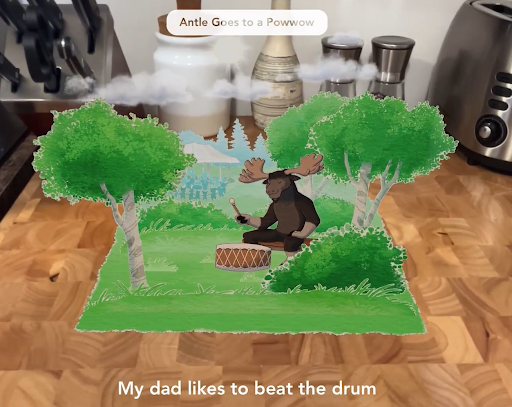
In the picture at the beginning of this section, Antle, a character from Sprig’s Indigenous Stories series, sees his father playing the drums. 

The simulation can be projected on any surface using an iPad. Different angles can be accessed by moving the iPad around. The images are dynamic and move in the scenery, and as one zooms in, the noise of the drums gets louder, providing a realistic multisensory experience. Students can interact with the story and the characters, learn to pronounce certain words, work on their oral language skills and, in this case, learn to speak Indigenous words.

It’s very important to state the educators’ integral role in all of this. With their expert guidance and usage of AR capabilities, students will acquire the maximum benefit from such technology.

Currently, less than 10% of schools use AR in classrooms. But that can change very quickly as AR education apps become more prevalent and available. As this innovation expands, it’s important to ensure that all children get the same opportunity to experience AR.

As the world changes, it’s important to teach young learners the foundational skills and concepts using the latest innovations at our disposal. If you have an AR idea that you want to implement in the classroom, or are interested in producing an AR educational series, please get in touch.


Holistic Formative Assessments. The New Wave.

In education, formative assessments are extremely popular. Schools that use formative assessment show gains in academic achievement for students. For previously underachieving students, the gains are more pronounced due to the impact of formative assessments. 

Formative assessments happen regularly in classrooms where a student’s progress is evaluated on a daily or weekly basis. Educators are able to obtain information, offer feedback and adapt instruction accordingly.

Formal formative assessments use well-defined grade rubrics, while informal assessments use methods such as observations, notes, etc. We have covered formative assessment best practices in this post, with each practice varying in its range of formality.

Summative assessments cap either side of formative assessments in every school year. The student’s progress is measured at certain times of the year, to acquire an understanding of the sum total of what the student has learned since the last summative assessment. 

Standardized assessments are less frequent than summative assessments. They usually happen just once per year or every few years, beginning in grade 3 in both Canada and the US. 

Diagnostic tests or screeners are the rarest of the bunch. They are not required by all jurisdictions or school systems. But many do require a diagnostic test for entry to kindergarten or primary school. They are sometimes known as pre-assessments, as they offer information to educators about a student’s level of knowledge prior to instruction. 


What Are Holistic Formative Assessments?

Compared to formative assessments, much less is known about holistic assessments.

Holistic Assessments Have the Following Characteristics

  1. Assess Learning that occurs in multiple locations. The ability to look beyond the learning that occurs in the four walls of the classroom, and additional looks to understand and assess the learning that occurs at home, outside and in the community.
  2. Include multiple perspectives. Going beyond an assessment of learning from the teacher’s perspective, but including parents, caregivers, librarians, Elders, and community members in the assessment process.  Reaching out to understand the learning opportunities for every child, from multiple perspectives.
  3. Assessing Beyond cognition.  Not only assessing the concepts and skills learned,  but also looking to understand a students’ ‘access’ to learning, ‘participation’  in learning and ‘opportunities and supports’ for learning that always impact a      student’s ability to succeed academically in the classroom.


Holistic Formative Assessments Are Multimodal

Holistic formative assessments retain all the previously mentioned attributes of holistic learning. In addition, both formative and summative assessments are incorporated in the holistic formative assessment framework. Such assessments can also be used as diagnostic tests for incoming kindergarten or grade 1 students.

Thus with holistic formative assessments, it’s more than just a single assessment. Rather, it’s a comprehensive system that focuses on a broader understanding of learning. 

It casts a wide net in trying to understand the whole child. It accounts for multiple learning perspectives from both inside and outside the classroom.

Subsequently, holistic formative assessment supports the development of an effective, personalized learning strategy for all students. New holistic assessments often follow at the end of the learning period to reevaluate the growth and development of the child.

Formative assessments are interspersed between such holistic assessments to help educators make adjustments in real-time. This provides adequate checks and balances to ensure the progress of every child. 


Thus, holistic formative assessments dig deep and span wide

They dig deep for information that would not otherwise be available. Information such as other languages spoken by children at home and in the community, surveys from parents and caregivers on what opportunities for learning are available at home, and/or student perspectives on their learning strengths and challenges.

They span wide in that they do not consider simply one learning domain or examine only the current school year in isolation. Rather, if there are any missed learning opportunities from week-to-week, month-to-month, or even from the previous school year or home experiences, these are quickly and systematically addressed.  

Other than the structural aspects of the holistic formative assessment, what are its underlying philosophical principles? The holistic view on education provides the answer.


The Holistic View on Education

Holistic View on Education

The holistic approach to education holds the view that a student is a whole person with a mind, body, emotions and spirit. 

In the context of early learning, it focuses on the development of the whole child, placing equal emphasis on cognitive, physical, emotional and spiritual development. The roots of this pedagogical concept are in Indigenous education, who first adopted this method of learning for children in their communities. 

Holistic learning promotes balanced relationships between people, and between people and their environment. A safe and nurturing environment is provided where learning takes place. 

The holistic view on education requires a complete understanding of a young student’s learning preferences, strengths and circumstances. It uses holistic assessments to acquire such an understanding.

Holistic assessments can also support the promotion and revitalization of local languages and cultures for students in the classrooms. They provide a comprehensive view of a child’s learning by gathering input from the child, teacher, parent and Elder about learning in the home, school, community and on the land.


Where Holistic Meets Formative

Where holistic meets formative

The connection between holistic and formative assessments happens when the former is done frequently and linked to instruction. 

The individual results from holistic formative assessments are most effective when linked to personalized learning activities that can be done in the classroom, in the home, and in the community.  This is the part where it ceases to be just a holistic formative assessment, and becomes a tool to support equity and inclusion in education. 

When recommending activities for learning and assessment, the focus is as much on strengths and interests, as it is on any learning opportunities or deficits. 

The link between summative and formative assessments are usually left to educators to figure out. However, holistic formative assessments ensure that the results are always tied to a personalized course of action. This allows continuous support for the student’s educational needs. 

An example of how a holistic formative assessment can be administered, is how Sprig Language program integrates an on-screen off-screen approach.  The holistic assessment of early literacy happens on screen with the student,  uncovers new insights about the child’s motivations to learn. Such a wealth of information can be used to support more effective instruction in the classroom and support targeted and engaging learning at home.

The assessment and digital learning material can be accessed using a tablet, a phone, a PC or any other device. Physical classroom materials such as storybooks, language development cards and other resources accompany the assessment. 

Some of the materials can be used in the holistic assessment itself, others can be used for activities that are recommended by the assessment. These activities are most effective when they double as formative assessments (e.g., quizzes or games).


The Benefits of Holistic Formative Assessments

The benefits of holistic formative assessments

The structural benefit of holistic formative assessments is tremendous. It ensures that there is a comprehensive, 360 degree understanding of a single student spanning multiple school years.  This holistic understanding uncovers new insights about each learner, informing personalized instruction in ways that would not have been previously possible.

Here are some other benefits of adopting the holistic formative assessment framework.

Uncovers New Insights

Teachers will glean new insights from holistic formative assessments which would otherwise not be identified in traditional formative assessments. Information such as learning interests, learning opportunities outside of the classroom, and unique learning styles all emerge out of a holistic assessment and broader understanding of the student.

It allows educators to take a strength-based approach to instruction. It also allows them to build on the newly identified student strengths and interests to address the student’s needs and challenges, which would remain hidden without this holistic approach to assessment. 

Useful in Curriculum Mapping

Holistic formative assessments can be tied to the learning outcomes of any local curriculum. Curriculum mapping is a big challenge for educators in North America. Oklahoma State University published a paper that identified the following four improvement areas in order to achieve successful curriculum mapping.

1) sufficient and adequate training for mapping

2) provision of adequate resources and assistance 

3) constant communication about the initiative 

4) monitoring the implementation process


All four areas can be addressed with the guidance of the holistic formative assessment framework. As it’s a whole system of assessment, it comes with the necessary professional development and resources to implement the assessments. 

As the initiative is rolled out, the use of technology enables constant communication between educators and between educators and other relevant parties such as school administrators and parents. It enables personalized instruction for students grounded in a holistic understanding.

Lastly, there is the consistent recording of data, be it the completion of activities, or new data points from ongoing assessments. Especially in early learning, formative holistic assessments monitor the progress of students in their early grade classrooms. They improve the relevance of instruction to address the literacy and numeracy learning opportunities.

In fact, such assessments can be linked to state or provincial curriculum and standards for preschool and Pre-K-3. Sprig Learning is all too familiar with such a process, having done it for multiple provinces and states across North America. 

Inclusive in Nature

Holistic formative assessments are inclusive. They are important for mixed ability classrooms. They allow students to progress at their own pace. 

Learning can be accelerated for those students who grasp concepts and demonstrate skills faster than others. Learning can also be slowed down for those students who have to first close a certain gap in understanding, that will expedite their learning in the future. 

 Mitigates Bias

Holistic formative assessments reduce the likelihood of implicit bias by being more culturally responsive, educationally comprehensive, and having a system in place with multiple opportunities for assessments. It’s a topic we have covered extensively in this article on dealing with implicit bias.

In order to properly assess a student, it’s important to understand their learning needs, interests and familiarity or anxiety with the assessment process itself. Otherwise, they are at risk of being inaccurately assessed without having a comprehensive understanding in place. 

It’s the holistic formative assessments that allow educators to access this information, where they themselves have a better understanding of the student and their learning environment, and can tailor support and instruction to the learning needs and strengths of the student. An equitable result for all young students is the outcome. 


The Holistic Booster to Formative Assessments
The holistic booster to formative assessments

There are so many benefits to holistic assessments and holistic learning. Each of these 15 holistic learning characteristics positively influences the learning experience for early learners. 

It’s when holistic assessments are combined with formative assessments, the true power of assessments is unleashed. Research shows that holistic assessments improve student outcomes and result in a more equitable learning experience. 

The holistic development of students is a much-desired component of high-quality early childhood education, according to the Organization for Economic Co-operation and Development.

Most teachers are already using formative assessments in either a formal or informal capacity. 

If these assessments are driven by holistic approaches and placed in a structured setting, their full potential is realized. They are more acutely informed by a systematic and extensive analysis of student activity and learning perspectives. 

Contact us to explore how holistic assessments can be added to your assessment strategy. 
 

Recommendations to Make Best Use of ESSER Funds

The core values of Sprig Learning align well with the ethos behind using the Elementary and Secondary School Emergency Relief Fund (ESSER) funds.

ESSER is a type of fund which is non-competitive and state-administered. Every school entitled to receive federal funding is also eligible to receive the ESSER funds. ESSER released three stimulus packages, with the allotted funding increasing in each round. 

The Every Students Succeed Act (ESSA) is the main act that governs ESSER and all public education policy in the US.

To truly understand the basis of ESSER funding, it’s important to understand the principles of ESSA.

ESSA says that all students have access to an equitable and excellent education. 

These values of inclusivity, equity and excellence are thus reflected in the allowable usage of the ESSER funds.

It is precisely Sprig’s mission, to bring high-quality and equitable early learning to all young students from every community, being responsive to any cultural or linguistic differences. 

This article recommends the best usage of ESSER funds, by briefly reviewing its allowable usages and then looking at some examples of states who are appropriating the grant money to their educational institutions. It concludes with two specific recommendations on how to best use ESSER funds.


Allowable Usage of ESSER Funding

Allowable usage of ESSER funding

From coordination of response efforts, to addressing the unique needs of children, to training and professional development, there are in fact multiple allowable usages of ESSER funding. 

It’s what makes a needs assessment so crucial. Several uses of the grants are permitted, but their best use depends on the particular school or school district, or the priorities of the state.

Here are some statements that describe the essence of what the funds are being used for. Each statement is followed by what Sprig is able to offer.

The ESSER funds are widely used to acquire or purchase three types of assets. Infrastructure, evidence-based programs and technology. 

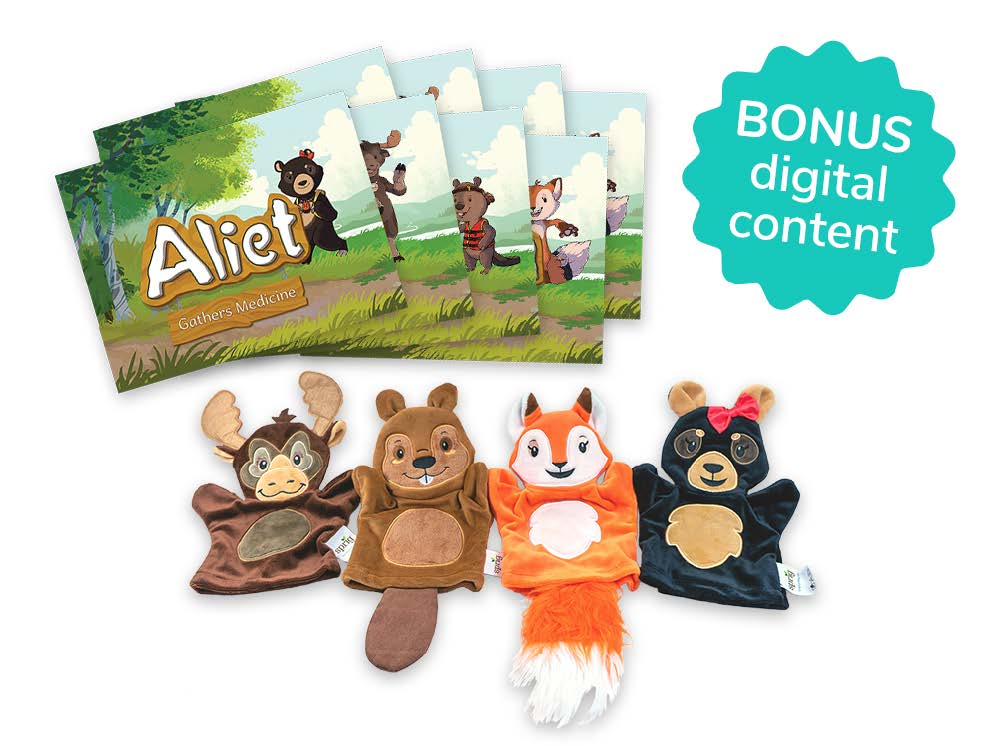
Sprig Learning offers early literacy and numeracy programs that can be implemented in classrooms. These programs include classroom resources such as books and puppets, but also technology by which educators can assess students and personalize learning. It’s an example of an evidence-based program that uses technology for assessments and instructional support. 

The ESSER funds are meant to advance equity in education. Any disadvantaged or marginalized student from any community is meant to receive the same high-quality education that gives them a fair chance at succeeding. 

Equity in education is something Sprig Learning is very familiar with, as its brand promise is to provide every child a fair shot at success. Sprig’s raison d’être is to help every child succeed by implementing our holistic approach to assessment and learning to uncover and support each child’s unique learning strengths, needs, and interests. 

The ESSER funds should be prioritized towards solutions that improve outcomes for all students.

Sprig Learning programs were designed to meet all early learning milestones, the effect of which is strongly associated with achieving both academic and social outcomes in later grades. 

In fact, the National Institute of Early Education Research (NIEER) states how focus on early childhood is a great ESSER investment. It writes that “high-quality preschool programs and exposure to a rigorous and engaging curriculum from Pre-K to grade 3 reduce the achievement gap and avoid more costly interventions in later grades.”

Meeting early literacy and numeracy benchmarks are significant markers for success. Sprig allows educators to personalize learning for all students with activities that are designed to work on all relevant learning domains. 

In early literacy for example, there are several language- and print-related activities such as storytelling, answering questions, nursery rhymes and drawing.

All the learning domains overlap and are interrelated. However, there are learning milestones that must be met at each phase (i.e., infant, toddler, preschooler, kindergartner, all the way up to grade 3).

 Sprig Learning programs allow the educator to see the level of the student at each phase.


What Is a Great ESSER Investment?

Great use of ESSER funding

ESSER makes it abundantly clear where the funds are to be used. Refer to the table and the paragraph that follows it in this page for a breakdown of ESSER I, II and III funds. ESSER I and II are very similar in what is covered, and ESSER III is a cumulative version of what precedes it, with a special focus on learning loss. 

A great ESSER investment fulfills a particular need of the school that falls within the allowable usages of the fund. It helps to see some examples of how the funding can be used.


Examples of ESSER Funding Usage


Recommendation from Edtech Magazine.

EdTech says data analytics programs are a great ESSER III investment. 

By data analytics, it refers to tools that can show all student data such as grades, test scores, GPA, and attendance on a dashboard. It gives educators and administrators the ability to see where learning loss occurs. 

It also acts as a great time-saving tool for educators where they don’t have to manually add data to spreadsheets.

Indeed, a dashboard is a must-have for any educational program these days. Sprig Learning has a dashboard that is accessible on both PC browsers and mobile apps where educators can interact with the learning portfolios of students in their classrooms.

Delaware

The Delaware Department of Education uses ESSER funds to provide digital books to students in all grades. It focuses on the acceleration model instead of remediation for literacy.

Monica Gant, the associate secretary of academic support for the Delaware Department of Education emphasizes unfinished teaching and learning versus learning loss.

She says “Learning loss indicates a deficit for students, where unfinished teaching and learning means that they haven’t had that opportunity yet for a variety of reasons”. 

Sprig also holds the view that rather than focusing on “learning loss”, it’s better to assess and uncover a child’s strengths and interests.  This holistic approach to assessment can be used to personalize instruction for every student. 

Louisiana Department of Education

Louisiana Dept. of Education lists the following allowable uses of ESSER II and III funds:

  • Expanded classroom libraries so every child has access to books.
  • Homework programming and support to assist students.
  • Digital applications to improve parent, student, and educator communication.
  • Professional development and support with integrating educational services into online learning environments.
  • Transitional support for students (early childhood to elementary, elementary to middle, middle to high).

All of the above uses are extremely relevant to the overall learning outcome of every child. 

Some quick reflections:

It’s best if a learning platform enables a connection between school and home, ensuring supports for parents and learning in the home . Active parental engagement is preferred, of which there are 4 kinds.

Sprig Home is a standalone app that can be used by parents to educate their kids independently or in collaboration with educators. 

It’s great if libraries are expanded, even in the form of digital or animated storybooks. For example, new stories are always added to the Sprig Library app.

The use of funds to facilitate transition between grade configurations is also highly encouraged. Indeed, one unified view of the complete learning history of a student is needed, so their circle of support can best help them throughout the different phases of school life. 

Tennessee Department of Education

Reading 360 is a program that helps support early literacy development in the state of Tennessee. It helps students develop strong phonics-based reading skills by supporting districts, teachers, and families. 

Part of the program will involve administering an approved universal reading screener to all students in grades K-3 each school year, and report data to the state department.

It signifies the importance of the yearly summative assessment, apart from the ongoing formative assessments. Sprig Learning’s annual holistic assessments serve the same purpose, where it ensures that all prerequisite learning needs are met before new concepts and skills can be taught to the student.


Best Use of ESSER Funds

Best Use of ESSER Funding

Close to $200 billion have been promised in the three rounds of ESSER funding. With the purchase of technology, it’s possible to give a massive boost to educators to teach large classrooms full of diverse learners. 

It is time-saving, it enhances the quality of instruction by maintaining individual learning profiles of each student, and it elicits engagement from parents if used to communicate with them.

Given the numerous benefits of a technological aspect of learning program, the ESSER funds cover the purchase of education technology, including software, that promotes and facilitates substantive education interactions between students and classroom instructors. 

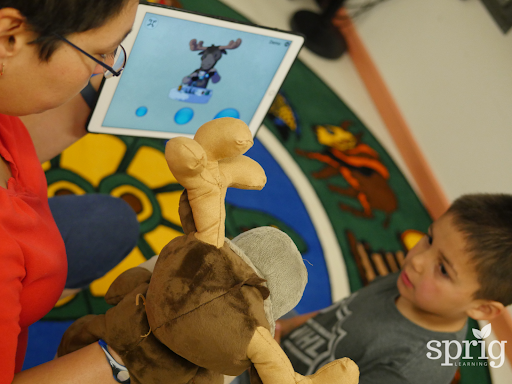
Sprig conducts holistic assessment using a touch-enabled classroom puppet. It allows students to freely and comfortably answer questions. Along with these answers, the perspectives of parents, the community and the educator are also considered in what is a 360-degree view of learning. 

Such a holistic approach to learning enables us to measure learning in school, in-home and in the community. It provides a true measure of early learning outcomes for every child.


Two uses of ESSER funding stand out in particular.

Regular Assessments to Measure Learning

In the US, approximately 70% of educators do not use or have access to high-quality standards-aligned curriculum. It’s important that curriculums are aligned to a state’s academic standards and have embedded assessments to track progress.

There is a need for high-quality instructional material, but also a regular assessment process by which learning is measured for students. 

Culturally Responsive Educator Backed Learning Material

In a randomized study, it was found that improving the curriculum was 40 times more cost-effective than reducing class sizes. 

Demographic and social factors are beyond the scope of control for education leaders, but responding to students’ needs is very much doable. To this end, it’s good to implement programs that are endorsed by educators and which are adaptable to different kinds of learners from all communities.


To learn more about how Sprig Learning fits the bill to accomplish the two objectives above, please reach out to us. 

Sprig Learning Yearly Review [Includes message from CEO]

As another year draws to an end, Sprig Learning would like to thank all of its educational partners, schools, teachers and well wishers for their continued support. As a purpose-built company, our goal at Sprig is to ensure every child receives a fair shot at success.

Here is a look back at the things we have accomplished this year to help us achieve our goal.


App Features

Our Sprig Language and Sprig Math programs were fortified with the latest best-in-class features on our iPad apps. Teachers can now track classroom progress straight from the dashboard on their Sprig app. The dashboard allows any educator to view their student’s assessment results, their level of proficiency in language or math, and their learning activity completions. 

Additionally, educators are now able to view, search, save, filter and complete personalized activities on their app with the students in the classroom. This allows for a level of customization that was previously only available to teachers online.

Currently, we are busy introducing augmented reality in some of the featured stories in our programs. Stay tuned!


Sprig Home

Sprig Home was launched in the summer of 2020, to help parents support early learning at home. When schools were closed because of the pandemic, Sprig wanted to support any potential missed learning opportunities by supporting parents with at-home learning ideas through the Sprig Home app. Parents were able to support fundamental early literacy and numeracy concepts and skills through easy-to-understand, at-home learning activities that fit into parents’ daily routines.

Sprig Home was made freely available for download until the beginning of the school year, so parents had a chance to teach their kids during the summer learning slide, a phenomenon that exists every year, with or without the pandemic.

You can find the Sprig Home available on the App Store today!


Sprig Math Game for Kids

We are working on the development of a Sprig Math Game (name to be decided)  iOS app, focused on interactive, teacher-developed math activities that allow students to engage and learn the fundamental math concepts required for young learners.

The app will allow children to explore and master the necessary math concepts needed to be successful in Grade 1. Sprig is looking to launch the first version before Summer 2022. We are working in partnership with math specialists from Mi’kmaw Kina’matnewey, the Faculty of Education at Saint Francis Xavier University, and the Nova Scotia Ministry of Education, Nova Scotia.


Greater Reach

Sprig’s early learning programs are now fully aligned to the curriculums of the following provinces in Canada: Nova Scotia, New Brunswick, Ontario, British Columbia, Manitoba, Yukon and Alberta. It’s a great feeling to be able to design holistic learning experiences that fulfill all the curriculum criteria set by different jurisdictions.  We are also actively working with schools and organizations in the United States to align to many local and state curriculums. 

We have added over 200 new activities to our Sprig Language and Sprig Math programs. We will continue to add more, as we give educators, parents and other caregivers the opportunity to nurture the roots of young students. 

We are very pleased to welcome Elsipogtog and Tobique First Nation in New Brunswick as the newest Sprig schools. By creating high-quality early learning programs, we believe we are restoring education equity in all parts of Canada.


Videos for Language Revitalization

We are always adding new Indigenous stories to our Language Revitalization program. By collaborating with Indigenous Elders, narrators and speakers, we are creating engaging learning resources that can be used in schools to educate young students about Indigenous languages and cultures. Animated stories are a big part of this learning experience.

Some of these animated videos have been uploaded to YouTube for all to see!


Sprig Library

We now have English, Tsu’utina and Mi’kmaw languages in the Sprig Library app! The interactive flip-book pages provide a realistic experience for readers, while hidden sounds and animation help early readers stay engaged in the story. Coming in 2022, these stories will also be available in Cree, Dene and French languages.

Furthermore, we are also working on developing decodable texts for emerging readers. These text passages are a crucial part of a structured literacy approach which contain words made of letter-sounds.


The Sprig Store

We launched the Sprig Learning Store in November. This was part of Sprig’s response to help bring increased awareness to Indigenous cultures and languages across North America. 

We wanted to make the Indigenous-theme resources, developed with Indigenous educators and Elders,  publicly available for purchase for other school districts and educators across Canada and the US.


An Eventful National Indian Education Association 2021

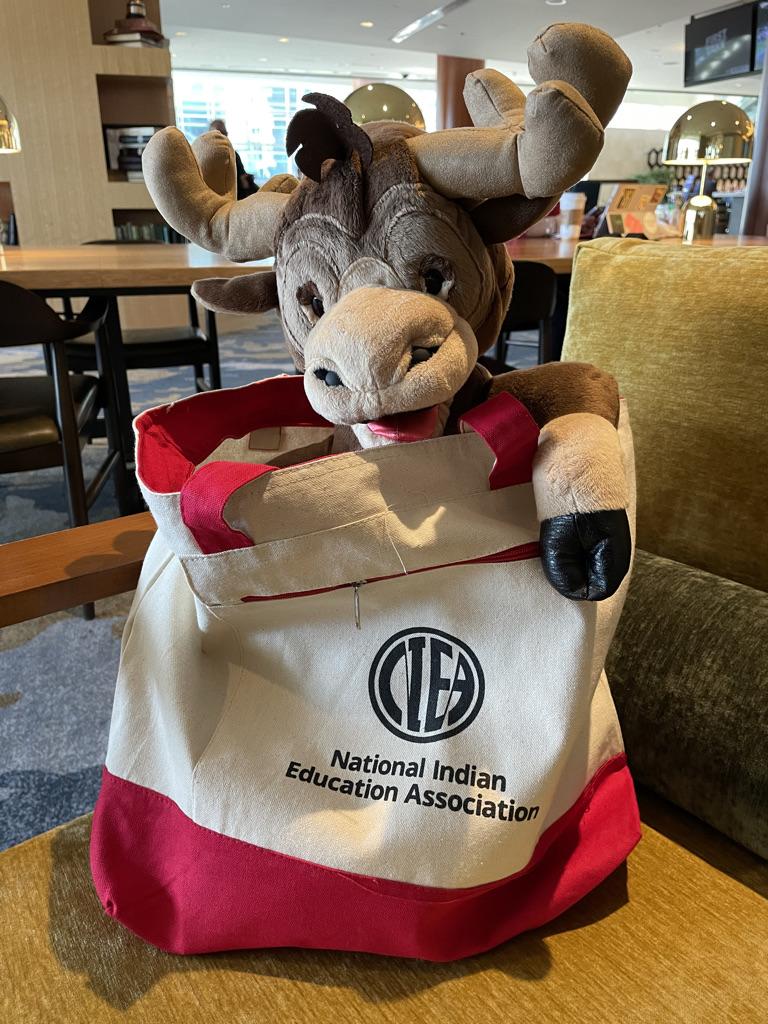
We attended and presented at the 52nd annual NIEA Convention & Tradeshow in Omaha, Nebraska in October. It was a wonderful event, with many participants who gathered together to discuss Indigenous education. The theme of the event was Indigenous sovereignty in education. 

Blaire Gould, Executive Director of Mi’kmaw Kina’matnewey, and Sprig presented the topic on Friday, Oct. 16 , Holistic Assessments: Improving Early Literacy Outcomes. It was very well received and later presented in a webinar on it on the same topic. The recorded presentation is available to all those who registered, but could not attend. If you are interested in streaming it as well, contact us and we will provide you with a private link.


Relaunched Newsletter

We relaunched our brand newsletter, Root to Fruit. Root to Fruit curates early learning industry news with original perspectives on issues that matter in early childhood education. 

In addition, it provides blog roundups from the insightful Sprig Blog. We present the latest and greatest information on early learning from four different lenses: school innovation, teachers, parents and indigenous education. 

If you have not subscribed yet, you should definitely consider doing so.

We are going to improve it further in the new year to add even more value for our readers.


A Message from Our CEO

It’s one thing to write an annual review on behalf of the whole team, but we would be remiss without talking to our CEO, Jarrett, about his opinions on where things are and where things are going. So we asked him:


How was the year 2021 for Sprig Learning and what does the future hold?

While our team at Sprig has long been committed to ensuring all early learners have an equal shot at success in school and in life, this last year has changed the context in which we do our work – now and moving forward.  

At Sprig Learning, we adapted and innovated to continue to  provide the tools and resources needed for our students, teachers and caregivers. We collaborated and innovated to ensure our holistic learning programs could be delivered and effective in any learning environment, whether that be in-school, remote or hybrid.

We are fortunate to have incredible partners and we are grateful for all the ongoing support you continue to bring. In 2022, Sprig will continue to innovate to support all educators to be champions for early learning and to ensure all students have a fair shot at success both now and in the future.