CA (613) 212-2225 | US (720) 994-8779 [email protected]

How Literacy Coaches Help Reading Achievement 101

Sprig Learning creates early learning programs that build early literacy skills and ensure every child reads confidently by Grade 3. Sprig’s holistic approach sets it apart from most programs, in that it involves multiple individuals in supporting the success of the child.

This includes teachers, specialists, education administrators, staff, parents, caretakers, etc., all of whom coordinate their efforts to give the child the best early learning experience.

All of these early learning roles can be put into two categories. In-school and out-of-school. 

Last article, Sprig focused on the reading specialist, an extremely important role in any early literacy team. 

This week, we turn our attention to the literacy coach. Like the reading or literacy specialist, it’s another in-school role that plays an invaluable part in teaching school children how to read.


Who Is a Literacy Coach?

Who Is a Literacy Coach

The literacy coach, or reading coach, is someone trained in early literacy and who is aware of all recent developments in reading research. They use these skills to show teachers how to more effectively help students learn to read.

The role of a literacy coach is multivarious. It involves planning for coaching, reviewing teaching and assessment practices, and organizing resources for early literacy instruction.

With literacy specialists, the focus is more on directly instructing students and supporting teachers where appropriate. With literacy coaches, the focus is more on the planning and collaborative process. It is constant co-creation in every aspect of teaching.

The literacy coach meets with teachers to listen to them and learn about their efforts, needs, strengths and concerns. They co-review the assessment data, student goals and student characteristics to set priorities. They also co-plot the teacher’s schedule to match teaching goals to time allocations. 


The Literacy Coach in Action

The Literacy Coach in Action

​​Indeed, because of the diverse nature of the literacy coach role, it helps to understand what is expected of them.

A lot is expected from the literacy coach. The International Reading Association outlines the following five criteria for literacy coaches.

  1. Excellent classroom teachers.
  2. In-depth knowledge of reading, instruction and assessment.
  3. Experience working with teachers in professional development.
  4. Excellent presentation skills.
  5. Experience in modeling, observing and coaching. 


All five criteria are equally important. To gain further clarity on how these expectations are executed everyday in the school, let’s look at a qualitative study of literacy coaches in Ontario, Canada. 

The study found that literacy coaches served three major roles in their schools. Namely, school literacy program organizers, school leaders and support providers.


Program Organizers

As school literacy program organizers, literacy coaches perform organizational tasks such as following up with the ministries of education, corresponding with school board members, updating school evidence binders, organizing book rooms, and consulting with teachers to order new resources. 


School Leaders

As school leaders, the literacy coaches adopt new literacy initiatives and lead the way in conducting professional development sessions for teachers and guiding professional learning communities. 


Support Providers

As support providers, the literacy coaches act as the support person for content knowledge and resources. Teachers regularly seek advice from them about assessments, lessons and professional reading materials. The literacy coaches also provide emotional support, which consists of encouraging, thanking and rallying the teachers.


The Need for Literacy Coaching

The Need for Literacy Coaching

​​It’s hardly surprising that given everything literacy coaches do for teachers and early literacy programs, they have a tremendous impact on literacy achievement. 

In large urban school districts, literacy coaching has led to statistically significant improvements in student learning, teacher practice and classroom literacy environment. 

Children’s Literacy Initiative did a review of nine studies that show that teachers who receive 14 hours of sustained literacy coaching show positive gains in their students’ literacy scores. 

Furthermore, these gains are larger for teachers who receive 30 or more hours of literacy coaching throughout the whole school year. 


Keys to Effective Literacy Coaching

Keys to Effective Literacy Coaching

Given the importance of literacy coaching, how can they be better supported?

The research on effective literacy coaching points to several factors that influence the effectiveness of the literacy coach:

  • Coach’s accessibility.
  • Teachers’ ability to have one-on-one interaction with their coach.
  • Inclusion of teachers in the coaching planning process.
  • Adjustment of coaching model to meet local needs.
  • Principal’s support for the coach.
  • Expertise on coaching material.
  • Adherence to the coaching model.
  • Resistance to the coaching model.
  • Respect for teachers.


These factors can be broadly summarized to state three findings. In order for literacy coaching to be effective, there needs to be:

  1. Adequate collaboration between the literacy coach and the teacher.
  2. Acceptance of the literacy strategy implemented in the school or district by all (strategy will include model and resources).
  3. Appropriate modification of the literacy strategy, as needed.


Looking at literacy coach evaluations from 15 states, the vast majority of principals and teachers agree that the literacy coach is a helpful, knowledgeable and valuable resource for effective instruction. 

There seems to be enough support for the literacy coach role in its ability to collaborate with others and dictate the literacy strategy. It’s the quality of implementation of the finer details of any literacy program that deserves a closer review.

It can be difficult to manually keep track of a literacy plan. With so many students and teaching roles involved, the right tools can make a world of difference.


Technology’s Potential in Literacy Coaching
technology's Potential in Literacy coaching

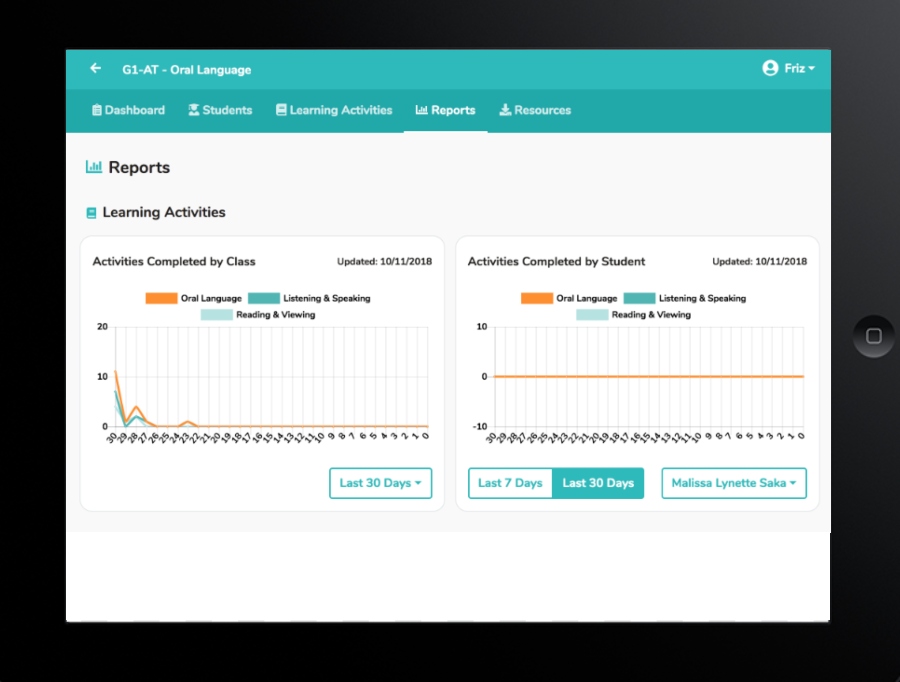
Picture: Report that shows learning activities completed by class and by student. *Sample*


Like most literacy related positions in school and elsewhere, the literacy coach has to evaluate the extent of technology use in teaching early literacy skills and concepts.

In a phonics-based reading program, it takes numerous repetitions to train the formative brain to access new information accurately. The right digital literacy program can systematically offer these review activities to a group of early learners. The teachers supervise these activities for one group of students so they learn the concept being taught, while engaging with another group for more direct instruction.

These groups can then be alternated, with the latter group practicing what they have been taught under supervision, and the former group being assessed for their new skill level for that particular reading exercise. 

Phonics instruction stresses the connection between written letters and spoken sounds. Direct, explicit and multi-sensory instruction of new phonemic concepts teaches literacy to students in line with the Science of Reading.

Such structured literacy programs are best delivered with the help of technology that keeps track of all lessons learned and organizes all lessons sequentially. 

Given all the hats the literacy coach has to wear, it definitely helps to have an evidence-based program in place where collaboration and instruction adjustment can occur.

The literacy coach and the teacher can co-plan for a class of students by looking at every essential reading skill that needs to be tackled throughout the year. By formatively assessing each student using the same program, they can discuss appropriate interventions when necessary.


Literacy Coaches Are Here to Stay

Literacy Coaches Are Here to Stay

​​Building early literacy skills and supporting learning recovery require high-skilled teachers in every content area. In literacy especially, schools need language professionals. 

Literacy coaches are becoming essential at a time when new approaches are being tried to improve literacy scores. The school relies on coaches for their collaboration, leadership and support.

Literacy coaches are in a partnership with teachers for ongoing job-embedded professional learning that increases teacher capacity to meet students’ needs. So there is a potential to make long-term gains as well, where teachers’ skills are leveled up from year-to-year. 

Literacy coaches greatly amplify teachers’ reflection on students, the curriculum, and pedagogy. Such an enhanced and deliberate thought process leads to more effective decision making, characterized by data-oriented student and teacher learning.

This is part of an ongoing blog series on important early literacy positions. Sprig is all about doing whatever it takes to achieve literacy for all early learners. If you have any questions or ideas about how we can take further steps to bring forth literacy equity, please do get in touch.


The ABCs of Supporting Reading Specialists

Reading specialists, or literacy specialists, undergo specialized training that enables them to help struggling readers. They work with classroom teachers in the early grades to support and supplement reading instruction. 

They also have the added responsibility of assessing students and analyzing data. This is to identify students who may need further help and to monitor their progress. 

Reading specialists work on specific skills that are essential on the path towards reading mastery. They help reinforce these skills which the general curriculum may or may not cover. 

In the US, there are approximately 19,000 reading specialists. 

Approximately 4 million students are enrolled in Grade 3 in the US in 2022. We regularly read reports from different states about the percentage of Grade 3 and Grade 4 students scoring below the state assessment level for reading proficiency. It ranges from 20% to as much as 60%. 

Even if the lower quartile is considered, that means 1 million students are struggling to read in the US. It’s quite a daunting task for reading specialists, with each reading specialist, on average ,responsible for supporting 52 students!

In this article, we look at the nature of the job that is done by reading/literacy specialists, evidence of their effectiveness, and put forward ways in which we can better support them. 


Understanding The Role of Reading Specialists

Understanding The Role of Reading Specialists

In order to support reading specialists, it’s important to understand their role.

Though at times used interchangeably, the reading/literacy specialist, the reading teacher, and the reading/literacy coach are different roles. 

The reading teacher is the primary classroom teacher in the early elementary grades. They are responsible for teaching the language arts curriculum. 

The literacy coach role has many overlaps with the reading specialist, but one important differentiator is that the literacy coach provides in-class literacy coaching to the teachers. They are often involved in the planning process of how to raise the literacy achievement for a whole classroom. As such, they are more involved with teachers.

The reading specialist works more closely with students, and acts as a resource for teachers. They assess and instruct students, provide personalized instruction as required, and create literacy activities for the teachers. 

Due to their close proximity to students and knowledge of early literacy instruction, they have a special significance in any pre-K to 3 education team. 


Success of Reading Specialists

Success of Reading Specialists

​​Reading specialists are well versed in structured literacy approaches. 

As more schools are shifting towards the Science of Reading in their early literacy strategies, the knowledge and training the reading specialist possesses has become a valuable commodity. 

Literacy specialists are able to combine their skillset with assessment tools to provide science-based reading instruction to the whole classroom, but also work on specific skills for those students that need the extra help. Thus, they are an ideal fit for early literacy intervention programs in schools. 

There is evidence to suggest that early reading interventions work best when facilitated by technology. In a study of seven schools in southwestern US in rural low-income communities, groups of students who received technologically facilitated early reading intervention outperformed their peers in all reading outcomes.

The Center for American Progress, a nonpartisan policy think tank, recommends the U.S. Department of Education give competitive preference to educational programs that provide teachers opportunities to work with certified reading specialists. 

This highlights the invaluable position of reading/literacy specialists in their ability to positively influence outcomes in early reading programs. 


Reading Specialists’ Principles That Unlock Student Potential

Reading Specialist Principles That Unlock Student Potential

Sprig Learning aims to provide every child a fair shot at success. 

To maximize every early learner’s reading potential, it’s imperative we support our reading/literacy specialists. 

Reading specialists follow these four principles to raise literacy performance. These four important conditions have to be met in order to support our reading specialists.

1) Provision of resources and professional development opportunities that focus on the latest evidence based approaches.

Reading specialists need to use the right content and practices to teach reading to their students. 

Proven practices and educational materials should be chosen in order to empower reading specialists. With support from administrators, the most accurate and effective instruction can be provided to the students that is conducive to literacy achievement.

Professional Development should also focus on science-backed content and instruction. It can include grade-level meetings, workshops, professional learning communities, teacher collaboration, and conference attendance. 


2) Student assessments throughout the year for implementing effective differentiated instruction.

Reading specialists benefit from assessments that are formative, reliable and efficient. It’s best when these assessments are easy to implement and are paired with a progress monitoring mechanism. 

With an intuitive assessment and monitoring system, reading specialists have more time to adapt instruction and deliver it to students. 

Taking the dual administrative burden of assessment and tracking off their shoulders, allows them more time to spend with early learners and work on those critical early literacy skills and concepts.

3) Immediate adjustments when interventions fail.

Every student is unique. It’s possible that they fail to understand the instruction that is provided to them based on initial assessment. The reading specialist should be ready to adjust the:

  • number of learning activities in daily lessons (too many or too few).
  • level of direct and explicit instruction (more direct).
  • pace of instruction (slowing down the rate).
  • duration of each lesson (more or less minutes).
  • frequency of lessons (more or less in one week).
  • level of difficulty (appropriateness of the instruction level).
  • number of students in a learning group (more or less students).
  • educational materials used (appropriateness of the educational material).


4)  Setting comprehension as the ultimate goal.

There are two main goals at play here. First, the student needs to be able to read. Second, the student must be able to understand what they read. 

The Science of Reading takes a systematic approach to this, tackling the most fundamental reading skills first such as phonological awareness and phonics, eventually reaching fluency, and ultimately working all the way up to comprehension. 

Everything is done sequentially and systematically, so the basic building blocks of literacy are covered and no child gets left behind. It puts reading specialists in a strong position where they do not have to remediate years or months worth of missed learning. Rather they can work to unblock whatever difficulty the early learner is facing at present.


Supporting The Whole Early Literacy Team

Supporting The Whole Early Literacy Team

It’s not only literacy specialists that need support, but other members of the early literacy team as well. This includes the primary classroom teacher, the literacy coach, the literacy coordinator, speech language pathologist, and others. 

Literacy inequity is a challenge big enough to warrant the joint efforts of all. Sprig hopes to do its part.

By understanding the fine details and principles of success for each role, it’s possible to bring everyone together for optimum collaboration. 

This is the beginning of our early literacy team series.The series will be continued next week, where the focus will be on literacy coaches.

If you have any questions about using technology for assessments and early literacy science-based instruction, do not hesitate to contact us. 

The Undeniable Case for Early Literacy Intervention

Literacy gaps that emerge in the earlier grades tend to widen in the later elementary years. To address educational inequity immediately, it’s necessary to intervene at the right time. 

Early literacy interventions provide additional literacy instruction to those K-3 students who require it. 

Sprig Learning builds early learning programs that build foundational literacy skills. 

It’s better to create an education system that assesses everyone early on for learning strengths and deficits, and provides appropriate instructions. 

Such an education culture is inclusive towards all and mitigates the need for interventions.

Often the word “literacy intervention” conjures up thoughts that relate to cost-inefficiencies and doubts over its overall efficiency. 

But with hundreds of reading intervention programs being used by thousands of schools, we are past the point of debating the usability of interventions. 

Rather, the focus should be on how to best implement literacy interventions in schools. 

In this article, Sprig makes a case for early literacy interventions.


How Early Should Interventions Start?

How Early Should Interventions Start

The question of when to introduce intervention implies that supplemental reading instruction should only be an afterthought to initial reading performance. 

But it’s known that early learners arrive in kindergarten with a wide range of skill levels in phonological awareness, alphabet recognition, print awareness and other essential literacy skills. 

Students at this stage who lag behind often have difficulty catching up with their peers once they begin to receive instruction. 

Thus, early literacy intervention should be implemented in accordance with identified skill deficits as soon as possible. This can occur as early as preschool or kindergarten. 

Early literacy interventions in kindergarten have produced significant results in multiple language domains for students who are linguistically diverse learners.

Results from multiple studies show that a higher percentage of Grade 1 students tend to reach grade-level proficiency with the help of interventions than Grade 2 students. Thus, intervening at Grade 2 is sometimes too late.

Early literacy intervention should begin as early as possible. 

If literacy skills fade-out is a concern, then it must be noted that early literacy intervention participants have consistently shown to read at or above their grade level as far as three years beyond their intervention.

We all know that Grade 3 reading performance is one of the most reliable predictors of lifelong academic and social success. 

Thus, we can say that in order for the early learner to sharpen all their reading skills, leading to mastery by Grade 3, they should be properly assessed by kindergarten or Grade 1. 

Doing so will not only boost their literacy achievement performance in the short run, but establish a runway for them to become confident readers by Grade 3.


Prevention of Reading Failure

Prevention of Reading Failure

​​One of the main advocacy points of early literacy intervention is its ability to prevent reading failure.

While it’s important to maximize the learning potential of every child, it’s just as important to help those children who are at risk of falling through the cracks of the current education system.

The National Institute of Child Health & Human Development reports that 74% of children entering Grade 1 at risk for reading failure have reading challenges later as adults. This further corroborates the urgency of early interventions.

Research shows that children who have difficulty acquiring phonemic awareness and phonics skills generally fail to read, or read poorly, and that those poor reading skills are perpetuated without proper interventions. 

Thus we see that when it comes to interventions, it’s not just about intervening early, but making sure those interventions are informed by instruction that is backed by the Science of Reading.

Intervening very early on by creating a culture of assessments for all types of learners may help increase the size of the safety net. 

But the type of explicit and systematic instruction that goes into addressing some of these skill gaps speaks to the quality of the safety net. Interventions should also be a part of structured literacy. 


Lessons from Popular Literacy Intervention Approaches

Lessons from Popular Literacy Intervention Approaches

​​Literacy interventions are best when they are:

  1. applied early. 
  2. part of the education system where everybody is assessed for their current skill levels.
  3. backed by the Science of Reading, or structured literacy.

Now, let’s look at some examples of current literacy interventions. Lessons can be borrowed from them and applied to early literacy interventions. 


Structured Literacy Intervention

Structured Literacy Intervention is based on structured literacy instruction, which is a comprehensive and evidence-based system of explicit, systematic and sequential instruction. It provides sample intervention activities. 

The term was first popularized by the International Dyslexia Association, but now is widely recognized as the application of the science of reading method. It not only helps those with Dyslexia, but all students in general. 

Is it fit for an early literacy intervention? 

Absolutely. It supports point #3 above, in that it is based on the science of reading. Dyslexia has been receiving a lot of attention lately, and it explains why certain students are prone to being underachievers in reading. 


Short-term interventions

Short-term interventions consist of one-to-one teaching for the lowest performing grade one students. Students receive 30-minute lessons each day for 12 to 20 weeks from a trained literacy specialist. 

There is evidence to support that such targeted interventions work to raise the performance levels of the lowest performing Grade 1 students. 

Is it fit for an early literacy intervention? 

It’s nice that it begins in Grade 1, but it would be even better if it started in kindergarten. Also, it leaves out other students who may or may not have been identified as needing intervention in Grade 1. Furthermore, this approach does not follow through in the later grades to ensure that there is no fade out of skills. 

It’s one of the most popular reading intervention approaches used today. It would be further strengthened if it was more inclusive, integrated into daily reading instructional practices and followed up in the later grades. 


Intensive Reading

Intensive Reading teaches small groups of students various reading techniques for 40 minutes a day. Parents are also asked to commit to do their own homework, which includes reading to their child every night.

Teachers have also noticed that these students in this approach are more engaged with reading and are excited to participate in the reading lessons. They are benefited from the continuous reading reinforcements that happen both at home and at school. 

Is it fit for an early literacy intervention? 

It’s a good program with fantastic books, best used in group instruction methodology. It’s a fast-paced system designed to move students along quickly. But in the early years, individualized instruction is just as important, and certain skills may need to be worked over and over until they are perfected.


The Ideal Early Literacy Intervention Program

The Ideal Early Literacy Intervention Program

It’s time to look at new solutions to the old issue of struggling readers. The recent Right to Read report released by the The Ontario Human Rights Commission was an eye-opener for many. What can be done differently? 

It’s our hope that this article presents some new ideas to you about how to ensure that more early interventions are inclusive towards all. Current approaches can be improved to ensure that there is sufficient planning and foresight for every young learner.

We have written more on this topic. If you liked reading this piece, you may also want to check out Building Early Literacy Skills in Schools. Thoughtful Considerations.

Interested in an inclusive early intervention framework case study? Let us know. 

Design a Summer Reading Program for Early Literacy

Anytime early learners are away from school for an extended period of time, there is a risk of their literacy skills deteriorating. It’s easy to see why.

  • A school provides young students with regular, structured lessons. 
  • Students have access to experienced teachers who know how to support early learners.
  • Students also have a consistent learning environment to practice reading, with access to numerous books and other educational materials.

The concept of the summer slide or summer learning loss is very real.  This is where there is a loss of knowledge that students gained from the previous school year following  the summer break.  

Sprig highlighted the summer slide phenomenon in a previous blog, where it was mentioned what learning recovery looks like for school children.

Indeed, schools should be well equipped to manage returning students that had varied summer experiences and were exposed to diverse learning opportunities.  Some students may require more help than others in the form of one-on-one or group support. 

But how can we mitigate the summer slide? 

Or looking at it from a more positive angle, what if more learning opportunities were available during the summer so all students could continue to maintain and build their early literacy skills?

Summer reading programs provide opportunities to both retain and grow literacy skills. Not all summer reading programs are the same in how they go about doing this. 

This article focuses on designing a summer reading program for early literacy. 

Some very important questions are first answered to understand the heart of summer reading programs, followed by some thoughtful considerations on the best way forward for early literacy.


What is a Summer Literacy Program?

Summer Literacy Program

​​A summer learning program centered around language or reading is called a Summer Literacy Program. 


It is intended for students who: 

  • are struggling to read at grade level. 
  • have socioeconomic or other identified challenges to literacy achievement. 


There is often no fixed age range for students who are selected for the program. 

They can be early learners in kindergarten, elementary and middle schools, depending on the local education board. The 3 to 12 age group is a common participation criteria for a lot of these summer programs. 

The summer literacy program encourages students to read during their summer break so they retain the literacy skills they have gained throughout the school year. 

Many literacy activities are offered according to the age group and reading level of the student. The duration of the program is often flexible. It can range from three weeks to the whole summer.

Reading knowledge and skills are not only retained in Summer Literacy Programs, but are often added as well. Students can make literacy gains during the summer break, which they can carry back to school in the fall. 

Summer Literacy Programs are especially pertinent for young learners as there is a short window of opportunity to maximize learning at this formative stage of learning. This includes:

  • Correcting wrong learnings
  • Recovering lost learnings
  • Adding new learnings


Every single day in the early childhood stage of learning is important. 

The learning students acquire at this crucial juncture of their lives helps develop and establish the necessary and foundational skills. These skills, when learned properly, serve students well in their learning journey for the rest of their lives.

Summer is one quarter of the year and provides a helpful boost to early learning when this time is well used.


What is a Summer Literacy Camp?

A Summer Literacy Camp is very similar to the Summer Literacy Program, if not identical.  

Some school districts call it a Summer Literacy Camp and make it available to their students who are struggling. 

The students enrolled in the program are recommended by the teacher and/or principal.


Is There One Model of Summer Literacy Program?

There are in fact many examples of what a Summer Literacy Program can look like. 


Some programs are directed at groups of students from multiple school districts. They are part of a study. 

Harvard funded the Reading Enhances Achievement During Summer program where children from low-income families were mailed books to read that matched their interests and abilities. 

The findings from this study showed that the children who received these books did better than their peers who did not receive them.


Some programs are multimodal. They have in-person, virtual and hybrid options. 

The Scholastic Summer Reading Challenge allows kids to log their reading milestones and unlock weekly milestones, thus creating an incentive to continue reading. 

It definitely helps to have such an interactive learning program which motivates children to pursue reading.


Some programs are completely resource based. 

Any principal, teacher or parent can benefit from a resource package that is designed specifically for early literacy. By using videos, books and other resources, they are able to create their own summer literacy programs, even if the official infrastructure for it does not exist. 


Is It An Early Literacy Intervention?

In some summer literacy programs, kids receive individual and small group literacy instruction. So the students who are already struggling are further differentiated to understand what would help them become better readers.

So yes, it can be thought of as an early literacy intervention during the summer break. But as discussed before, some summer literacy camps also see it as an opportunity to enrich learning. 

Usually, when schools have intervention in mind, they will explicitly create intensive summer intervention programs for a particular group of struggling students. Most reading research points to the success of such programs, showing a significant relationship between the hours of intervention and improvement of reading ability. 


The One Common Theme: Books

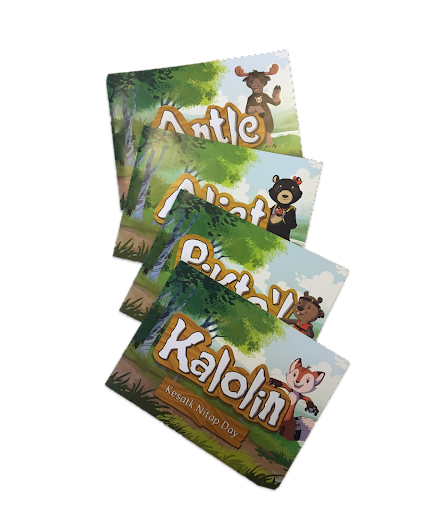
Sprig Storybooks

                                                                                                Sprig’s Storybooks

Whether it’s taking part in a reading challenge, doing a book review, participating in book giveaways, or maintaining reading logs, the one common theme in all Summer Literacy Programs is books. 

As such, it’s important to involve people who are knowledgeable about and have access to books.

Some school libraries stay open for the summer for this very reason, and the school librarian plays a key role in summer reading programs.

Even without a librarian, at the very least, kids should have access to fun books which appeal to them. These books can be accompanied by animations or other effects like augmented reality. 

Anything that encourages early learners to read should be favoured.


The Involvement of Parents

Involvement of Parents

The involvement of parents in summer literacy programs is not only recommended, it is actually imperative to student success! 

Yes, the literacy programs and camps are a way to keep kids engaged in a productive way during the summer. But just as it is during the school year, it’s important for parents to actively participate in their child’s learning. 

Active parental involvement makes a big difference when it comes to making literacy gains.

Nearly half of parents are not even aware of the summer slide. So summer literacy programs have the responsibility to make families aware of the opportunity that exists to make use of the programs, and also support families in their own efforts to work on literacy. 

The Sprig Home app has supported parents both during and post-pandemic to provide easy, accessible learning activities that turn those everyday moments into learning opportunities. 


Summer Literacy Is Both Fun and Serious

Summer Literacy is Both Fun and Serious

​​While summer literacy programs are meant to be fun, it’s also serious enough that many different types of organizations (school districts, colleges, societies, and educational organizations) are now offering some version of summer literacy instruction.

In a recent study of 580 public and private elementary schools in the US, 65% of them held summer literacy programs, despite not being required or funded to do so. 

Regardless of the type of organization, it’s clear that to provide an enriching learning experience to kids that truly excites them to pursue reading, educational resources are required that are specifically created for summer literacy. 

The Family Summer Literacy Boost bundle from Joyful Literacy helps parents and summer schools teach students who are in kindergarten to Grade 2.

This fully digital video series contains downloadable books, videos from topmost experts in the field of literacy, and instructional materials geared towards reading mastery.

Sprig fully endorses the video bundle, given its equal emphasis on both teachers and parents, the collaboration of whom is absolutely essential for a successful summer literacy program. 


Using What Works in Summer Literacy

The group of students you select for a summer literacy program, the modes you use to teach them, and the roles you involve to coordinate the program are all important decisions. 

But it’s most important is to use an evidence-based literacy strategy that works. 

The number of literacy activities one can do are endless.

Stories

Crafts

Explorations

Worksheets

Experiments

Etc.

But to do it all in a structured setting, supervised by literacy specialists and parents, is the real difference maker. 

Teachers know their students. When teachers are given the opportunity to modify program components for their students, the effectiveness of summer literacy programs is further enhanced.

When prior assessments are conducted to understand the student’s areas of strength and growth, reading instruction is adjusted accordingly for the student. 

From that point onwards, teachers can follow an evidence-based framework to monitor student progress until full literacy has been achieved. 

Achieving early literacy for all is Sprig’s passion! If you can’t get enough of early literacy improvement articles, please also be sure to check out:

The 4 Golden Rules of Early Literacy Development

Building Early Literacy Skills in Schools. Thoughtful Considerations

Have any questions about summer reading or summer literacy programs? Contact us.

The 20 Best Strategies for Teaching Early Math Skills

Learning math is a fundamental part of early childhood education. It’s why Sprig offers the Sprig Math program, to pair Sprig Language in teaching early numeracy and literacy respectively.

To ensure every child has a fair shot at success, both core subjects of language and math are fundamental and must be taught well. They complement each other. 

Making sense of oral language helps to learn math concepts by understanding what is being said or instructed.

Math also builds reasoning, which increases comprehension, including language comprehension.

The two subjects are so interconnected that language and math learning difficulties tend to coincide in primary school. There is also evidence to show that it’s more difficult to overcome a math learning gap than it is to overcome a language learning gap. 

In a study on school readiness and later achievement, it’s said that early math skills have even greater predictive power than reading and attention skills, when it comes to determining success.

Given math is such an integral part of early childhood education, we wanted to do a comprehensive roundup of all strategies written on this topic. 

We present them in this article. 


The Many Strategies for Teaching Early Math Skills 

Many Strategies for Teaching Early Math Skills

There are numerous strategies for teaching early math, and they have varying degrees of shared characteristics. 

We reviewed many different strategies (from multiple sources) to arrive at this list of 20 math strategies. Their overlaps are minimized. 


From Many to The Best


Repetition

  1. Use Repetition to Build Familiarity: Although the most basic strategy in this list, it is still very popular in teaching students early math. Through repeated practice, early learners get to practice skills such as anticipation, prediction, and cause and effect.


Start by Counting

  1. Start by Counting: Counting is one of the most common activities in teaching early math skills. Due to its prevalence, it can be thought of as a strategy. Instead of counting by rote, it’s better to develop quantity sense. Counting is reinforced in many literacy lessons, as well as everyday life situations.


Hands on activities

  1. Do Hands-on activities: Abstract concepts in math can be difficult to absorb for early learners. Doing activities with manipulatives, blocks, relational rods or clay are helpful to visualize these concepts. These methods of learning math are the first step of the concrete, pictorial, abstract approach to learning math. 


Graphics to engage and explore

  1. Use Graphics To Engage and Explore: Using colourful moving images, catchy sound effects and songs engages students in learning. Static images are good for demonstrating math concepts, but moving visuals accompanied by audio are even better. They support deeper thinking about the mathematical concepts in which they are engaged.


Differentiate using technology

  1. Differentiate Learning via Technology: Most teachers use some sort of differentiation tactic to teach their students. Technology amplifies this differentiation capability, by 1) keeping track of student profiles to see what they have completed 2) offering a chance to those students who are more adept at learning on-screen.

Early Learners will explain concepts

  1. Ask Early Learners To Explain Concepts: It’s good to ask students how they want to solve a problem or what strategies they are thinking about. It develops meta-cognition, which is an important aspect of learning early math.


    Implement Storytelling

  2. Implement Storytelling: Stories capture the imagination and keep kids engaged. Real-life scenario problems told through stories help kids understand the practicality of math. Fictional stories also grab their attention to look at a problem closely, and the use of characters engages them to solve a problem.


Provide Feedback

  1. Provide Feedback: Addressing learning gaps also involves fixing errors so they don’t turn into bad habits in the learning process. While a strength-based approach helps students to learn in their preferred styles, it’s equally important to correct mistakes when they do happen. 


Positive Attitude

  1. Develop a Positive Attitude: It’s easier and more enjoyable to learn math if the students believe that they can succeed. It’s beneficial for students if they develop a positive identity and attitude when it comes to learning math. It’s important to reward and praise students when they do well, so they are encouraged to learn more. 


Play Games

  1. Play Games: Playing games is one of the ways to make math learning fun. Research shows that playing with puzzles, blocks, and cards all enhance math skills in the early years. Interactive digital games take it one step further in engaging students and increasing learning gains.


Schema and Patterns

  1. Use Schema and Patterns: Recognizing patterns, making connections, and predicting sequences are all things that occur when children learn from recurring designs, or patterns. Once kids at an early age figure out the schema, or the underlying pattern behind a math concept, it’s easier for them to learn.

Developmental Progression

12. Use Developmental Progression: Children have some innate abilities to recognize patterns and to count at an early stage. Developmental progression uses such abilities to build a platform from which more advanced mathematical operations can be taught.


Formatively Assess

13. Formatively Assess: Monitor progress of what every student has learned. Determine their current level of math knowledge and differentiate instruction accordingly. A formative assessment tool can inform instruction by monitoring progress for each student. It’s helpful for pacing instruction according to the curricular outcomes at the end of the year.


Connect Math

  1. Connect Math to Other Learning Areas: Encourage students who see and explain their world in mathematical terms. Introduce general concepts informally, before formally connecting those concepts to formal math vocabulary. Students become more invested in learning math when they see how it is connected to the world around them.


Encourage Math talk

15. Encourage Math Talk: Bring up math in every situation, so students can practice applying the learned knowledge and concepts. Verbalizing mathematical thinking gives students greater understanding and awareness of their own problem-solving skills.


Time for Math

16. Set Time Aside For Math: Schools have learning blocks dedicated to math, so this strategy is well practiced. But it is extremely important nonetheless to reserve time for teaching math. It should be something that kids look forward to and not dread.


Cooperative Learning

17. Set Up Cooperative Learning: It’s possible to learn math alone, but working together in a pair, or in a group with many other students are also great options. Students get to learn from each other and  brainstorm problem solving ideas as a group. Teaching others leads to high retention of a math skill. It’s best to pick groups that are of mixed ability.


Teacher Collaboration

18. Promote Teacher Collaboration: Teacher collaboration, or collaborative planning, is one of the major markers of high-quality differentiated instruction. It’s no different in teaching math. Collaborating with other teachers, coaches or specialists improves instruction skills and helps to plan more effective lessons.Furthermore, teacher collaboration helps to build the right math culture in early learning, where math ideas are made fun, and are treated as concepts to be discussed and reasoned through.


Support Independent Practice

  1. Support Independent Practice: Scaffolding can be used to teach math, but not to the extent where it hampers independent learning of a certain skill or concept. There should be enough opportunities provided to the student to demonstrate their understanding. 


Foundational Skills

  1. Work on the Foundational Skills: Early math foundation includes number sense, representation, spatial sense, measurement, estimation and patterns and problem solving. There are many early childhood math activities for each of these learning areas. There are tools available that map such activities to their respective learning outcome. Sprig Math goes one step beyond this, and maps activities to the underlying math learning processes as well. 


Teaching Early Math Strategy Takeaways 

Teaching Early Math Strategy Takeaways

Going over the 20 strategies mentioned above, there are some themes that can be observed. 


  • Focus on existing math ability
  • Sense of belonging in the classroom
  • Math’s connection to the world around us
  • Maximization of potential according to math interests


Math teachers do a lot when it comes to achieving these objectives! 

They meet students at the level they are in, show them how math can be fun and relevant, and provide ample opportunities for them to develop as early math learners.

With technology specifically meant for early math, it acts as a force multiplier to the work teachers already do.

Students who take part in technology-based adaptive math programs score higher on all math strands in assessment, compared to those students who do not take part. There is a clear advantage to be gained in tailoring math instruction with the help of technology.

If there is any strategy in this article that you need help with ideating, implementing or measuring, feel free to reach out to us. Sprig Learning built Sprig Math specifically for early math learners.