Just like role models play a vital part in education, so too does culturally relevant content. Culturally responsive teaching has been a topic in education since the 1970’s, so it’s a wonder why many education systems continue to use the ‘melting pot’ approach. Learning is proven to be enhanced when children can relate to lessons on a cultural level. Before this can happen though, it’s important to understand what it means at a teaching level.
Switching from Melting Pot to Mosaic
Culturally responsive teachers may have to abandon old ideas about cultural deficits. They must be careful not to convey judgment that might reflect upon students’ families, friends or histories. This often means looking inwards to address their own assumptions about behaviours, like the caregiver who forgot to sign the student’s agenda or missed a parent-teacher interview.
A culturally responsive teacher is grounded in pedagogical practices. They teach ideas and social relationships that enhance learning by relating the curriculum to students’ backgrounds, establishing connections with families and communities, understanding cultural experiences, creating shared learning experiences, and recognizing cultural differences as strengths.
By acknowledging a child’s specific needs, beliefs and backgrounds, curriculums could shift from the traditional ‘melting pot’ to a more inclusive ‘mosaic’ approach. But before making the switch, it’s important to understand culturally responsive teaching spans deeper than just culture.
According to Gloria Ladson-Billings, culturally responsive teaching is a pedagogy that empowers students intellectually, socially, emotionally and politically. Adopting culturally responsive teaching in your own practice means getting to know students in a way that is personal and individual. It’s important to embrace a student’s racial or ethnic background, but it’s only a fragment of their identity. Recognizing and respecting students means learning how they learn and about their areas of interest.
To be effective, teachers must show courage, confidence and capability in the classroom.
Responding to The Need For Change
What makes culturally responsive teaching so important is how it filters content and teaching through cultural frames of reference. For example, if you ask a young Indigenous student in northern Saskatchewan what sound a subway train makes, they may have never even heard of one. Ask a Caucasian student from Toronto the same question and it’s a different story. The same could be said for an African-American student being taught to revere the discoveries of Christopher Columbus, an explorer known to have African slaves. Students whose lives and cultures are not treated as equal are less likely to buy into learning, whereas those who are empowered and feel valued will be ready to learn.
“While “caring about” conveys feelings of concern for one’s state of being, “caring for” is active engagement in doing something to positively affect it.”
– Geneva Gay, Culturally Responsive Teaching: Theory, Research, and Practice
With a culturally responsive curriculum, it makes room for learning opportunities that connect students to different cultures inside and outside the classroom. These connections can be made through something as simple as teaching a lesson through pop culture, movies or music the class will enjoy. The goal of culturally responsive teaching is to empower students and to expand their capabilities in other spheres of learning by making their own skills, languages and attitudes meaningful in the classroom.
The best way to establish meaningful, culturally responsive teaching is through collaboration. Connecting educators, caregivers and members of the community in student learning encourages sharing their wealth of cultural knowledge with students. Not only that, but when students see collaboration and mutual respect, they’re more likely to buy into their own education in meaningful ways.
Encouraging the use of native languages in class is another way to be culturally responsive. Encouraging students to use their native languages in class can result in students’ to be fluent in both the standard classroom language and native languages.
Connecting Cultural Responsiveness With Current Curriculums
What it boils down to is culture and heritage are two things that no one chooses. They are an unconditional part of being human and should be treated with the same respect and privilege that education commands.
Without engaging cultural responsiveness, it’s inaccurate for educators to claim that they can attend to the needs of different students. Keeping up with current ‘melting pot’ academic practices will continue to influence students in divorcing themselves from their cultural backgrounds.
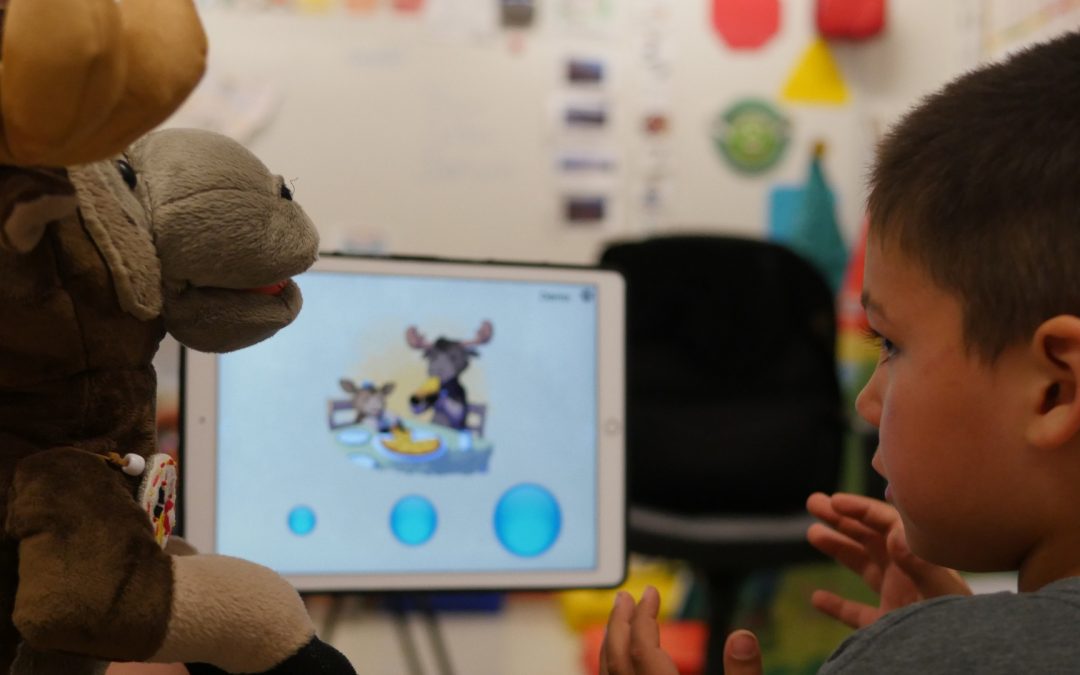
The key to connecting cultural responsiveness with curriculums is technology. It’s no secret that technology is a fantastic tool at making connections in education, but the important part is finding technology that connects caregivers, students, educators and community to bring cultural context to the classroom and enhance learning for every student.
More from the Sprig Blog
iPad in Education for Early Literacy Assessment and Instruction
With early literacy assessment solutions available as iPad apps, teachers can move beyond static, one-time evaluations, and instead capture, track, and respond to student learning in real time.
By using built-in iPad features intentionally with these apps, student assessment becomes embedded in daily instruction.
This article explores iPad in Education, for early literacy assessment and instruction.
Complete Your UFLI Progress Monitoring Through Granular Roll-up Reporting
Welcome to the final installment of the UFLI Digital Progress Monitoring Blog Series, which explores how progress monitoring data can be leveraged beyond the classroom.
Part 1 of this series focused on digital progress monitoring, describing the necessity of capturing and acting on sizable amounts of data generated by evidence-based curricula like UFLI Foundations.
Part 2 examined how aligning resources and activities to UFLI’s scope and sequence further strengthens instructional planning.
In Part 3, the focus of this blog shifts to what happens when student data is used to generate system-level insights for principals and school district leaders through granular roll-up reporting.
Level Up Your UFLI Progress Monitoring with Aligned Resources and Activities
When UFLI lessons and their associated reading skills are systematically monitored, it generates a substantial volume of data– essential for informing assessment, guiding instruction, and supporting targeted intervention.
But data alone is not enough.
As part of effective instructional planning, teachers prioritize the use of evidence-based literacy resources and activities to ensure their teaching is both targeted and impactful.