Welcome to the final instalment of the UFLI Digital Progress Monitoring Blog Series, which explores how progress monitoring data can be leveraged beyond the classroom.
Part 1 of this series focused on digital progress monitoring, describing the necessity of capturing and acting on sizeable amounts of data generated by evidence-based curricula like UFLI Foundations.
Part 2 examined how aligning resources and activities to UFLI’s scope and sequence further strengthens instructional planning.
In Part 3, the focus of this blog shifts to what happens when student data is used to generate system-level insights for principals and school district leaders through granular roll-up reporting.
Insights Beyond the Classroom
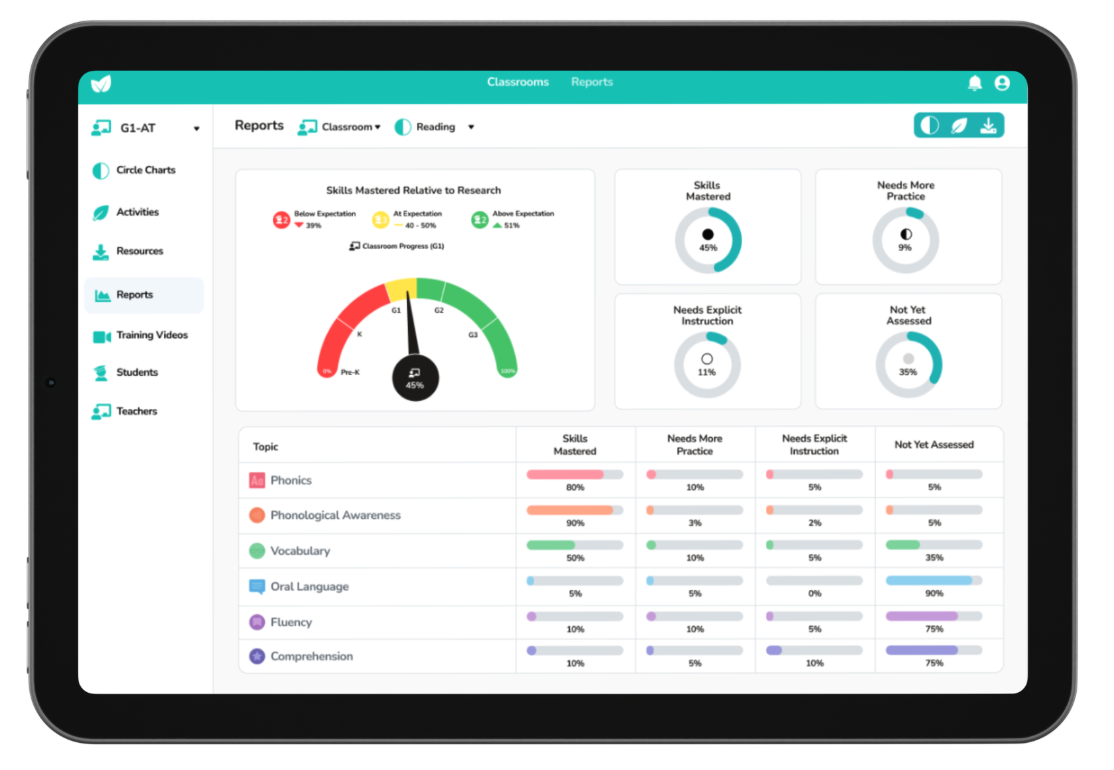
When progress monitoring is implemented effectively within UFLI Foundations, it produces detailed, skill-level data at the classroom level.
But its full value is realized when that data is digitized, aggregated and analyzed across levels:
- Classroom level: Focused on individual student progress and skill progression, this level is most actionable for a team of educators, literacy supports and school leaders who help target instruction and support for a particular group of students.
Example: A teacher notices several students are struggling with a specific phonics pattern in UFLI Foundations and forms a small group for additional practice before moving on.
- School level: By revealing patterns across multiple classrooms and grade levels, this level supports school leaders in identifying trends, ensuring instructional consistency, and directing resources where they are most needed.
Example: A principal sees that multiple Grade 1 classrooms are showing gaps in the same skill and organizes targeted professional development or specialized literacy supports to address it.
- District level: Offering a view of system-wide trends and outcomes, this level enables district leaders to make strategic decisions around curriculum implementation, resource allocation, and long-term literacy planning.
Example: A school district identifies that several schools are consistently underperforming in early decoding skills and allocates additional literacy specialists or intervention programs to those sites.
What The Layered View Entails
This layered view enables leaders to move beyond isolated snapshots and toward a cohesive understanding of literacy development across their system.
With access to roll-up reporting, principals and superintendents can:
- Monitor literacy progress across multiple classrooms and schools.
- Identify trends in skill mastery, gaps, and growth over time.
- Target instructional support, staffing, and resources where they are needed most.
Instead of relying solely on periodic assessments, leaders gain access to continuous, evidence-based insights.
This transforms classroom-level data into actionable system-level intelligence, supporting more strategic and timely decision-making.
Maximizing the Value of Existing Literacy Investments

UFLI Foundations and the UFLI Foundations manual are the property of the University of Florida Literacy Institute©. All rights reserved.
Schools and districts have already made significant investments in high-quality, evidence-based literacy programs like UFLI Foundations.
These programs provide structured, explicit instruction grounded in research.
However, without consistent and comprehensive digital progress monitoring, it can be difficult to fully understand:
- How effectively the program is being implemented?
- Which skills students are mastering? In which classrooms? In what schools?
- Where additional supports are required?
Combining Digital Progress Monitoring with Granular Roll-up Reporting
By layering in digital progress monitoring with granular reporting, school leaders can do the following:
- Amplify the impact of existing literacy programs by ensuring that every skill taught within structured curricula like UFLI Foundations is consistently monitored, reinforced, and supported across classrooms. This creates alignment between what is taught and what is learned.
- Ensure instruction is guided by clear, ongoing evidence of student learning, allowing educators and leaders to move from assumptions to precise, data-informed decisions about pacing, grouping, and intervention.
- Gain visibility into instructional effectiveness, not just student performance, helping leaders identify where implementation is strong, where variability exists, and where additional support or coaching may be needed.
- Track progress over time at both the student and system level, making it possible to measure growth, evaluate impact, and adjust strategies proactively rather than reactively.
The result is a stronger return on investment, not only in terms of maximizing the value of instructional resources, but in driving measurable gains in student achievement and supporting long-term literacy success across classrooms, schools, and districts.
Supporting Targeted On-Demand Professional Development
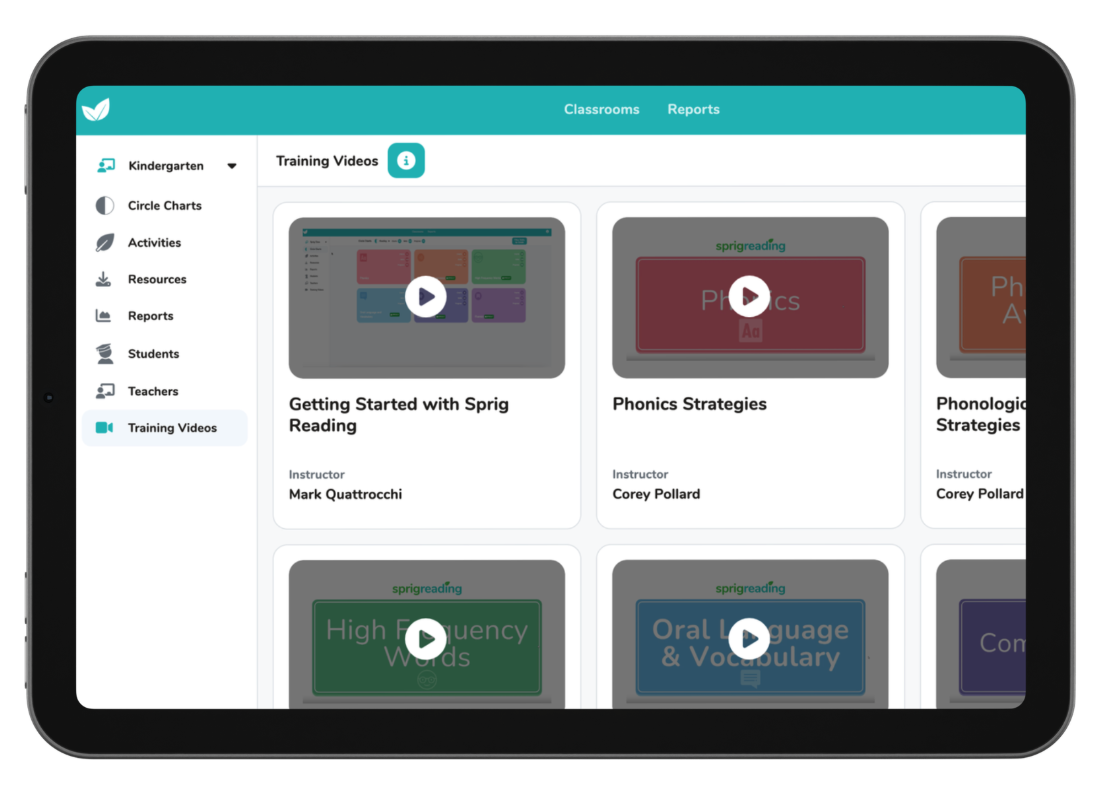
Professional learning must be based on evidence-based practices, such as teaching all the foundational reading skills.
It should also be updated based on the latest research on what works in early literacy.
Granular roll-up reporting plays a critical role in shaping effective, targeted professional development.
Rather than relying on broad, one-size-fits-all training, leaders can use data insights to pinpoint specific skill gaps across classrooms, identify instructional practices that need reinforcement, and surface variability in implementation across schools or grade levels.
This allows for professional learning that is:
- Focused on real classroom needs.
- Timely based on current data.
- Actionable with clear next steps for educators.
For example, if data shows widespread difficulty with a particular phonics pattern or skill, professional development can be designed to 1) revisit instructional routines, 2) model effective teaching strategies, and 3) provide aligned resources and practice opportunities.
In this way, progress monitoring data becomes not just a tool for tracking students, but a driver of educator growth and instructional consistency.
Complete UFLI Progress Monitoring Through Multiple Alignments
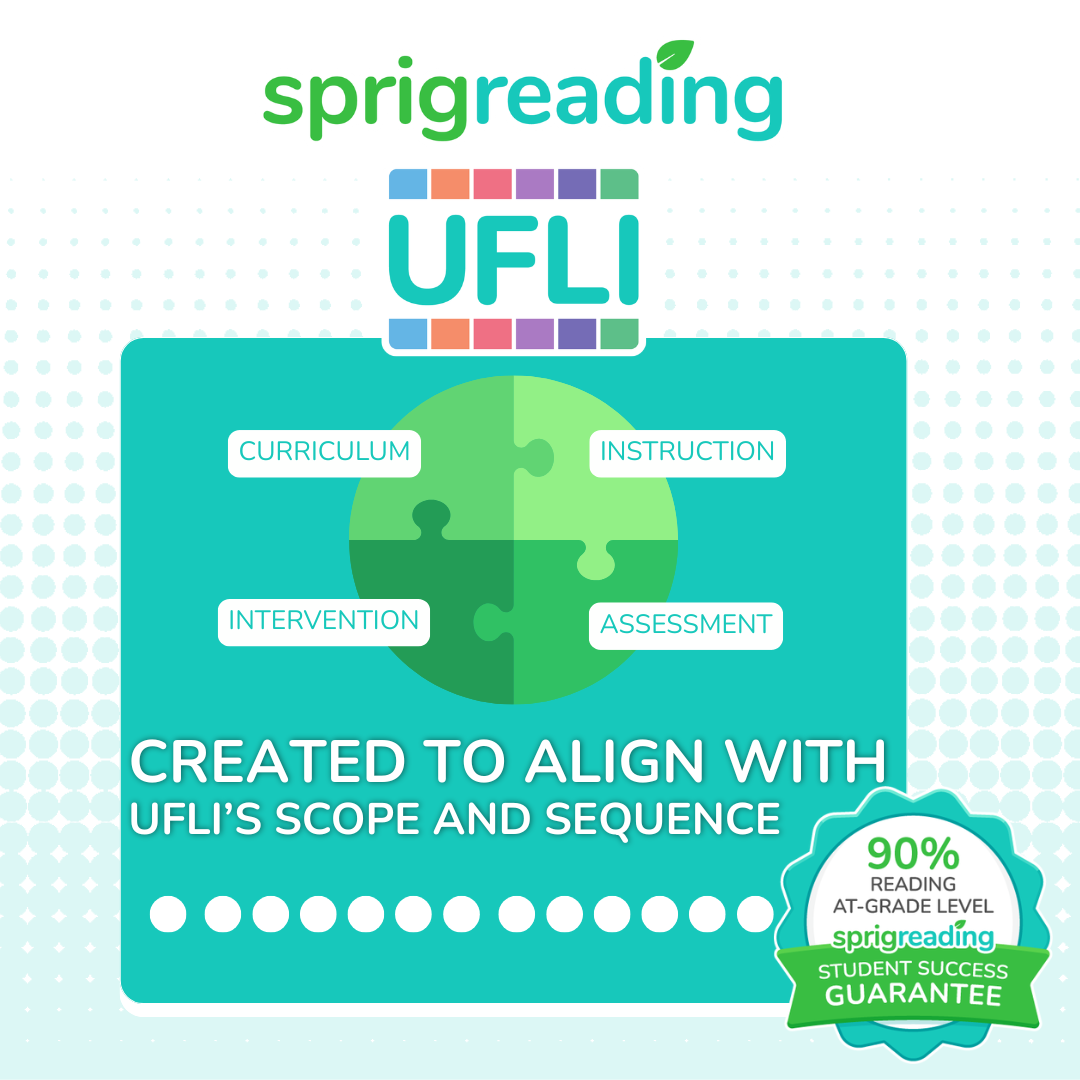
When digital progress monitoring systems created to align with UFLI’s scope and sequence, instructional resources & activities and granular reporting work together, data becomes part of everyday teaching and decision-making.
At the leadership level, this creates alignment between:
1) Curriculum 2) Instruction 3) Assessment 4) Intervention
Such an alignment ensures that every child receives the support they need to become a confident, capable reader.
Granular roll-up reporting makes this possible by connecting what happens in individual classrooms to the broader system, turning data into action, and action into improved literacy outcomes.
Educators are no longer relying on infrequent checkpoints. Instead, they can use real-time, skill-level insights to guide instruction at every level:
- Whole-class instruction: adjusting pacing and focus based on class-wide trends.
- Small group teaching: grouping students by specific skill needs.
- Individual intervention: targeting precise gaps with confidence.
Moreover, this information can be tracked for every student as they move through the education system, building a continuous historical record that helps evaluate progress and set goals for student cohorts over time.
While teachers focus on the needs of their current students, administrators use this longitudinal data to monitor cohort-wide trends and inform planning for both current and future cohorts.
With Sprig Reading, student cohorts can be tracked and performance benchmarked through intuitive visuals at the classroom, school, and district levels.The latest research-backed professional learning videos covering all foundational reading skills are available directly within the tool.
Align with UFLI’s Scope and Sequence