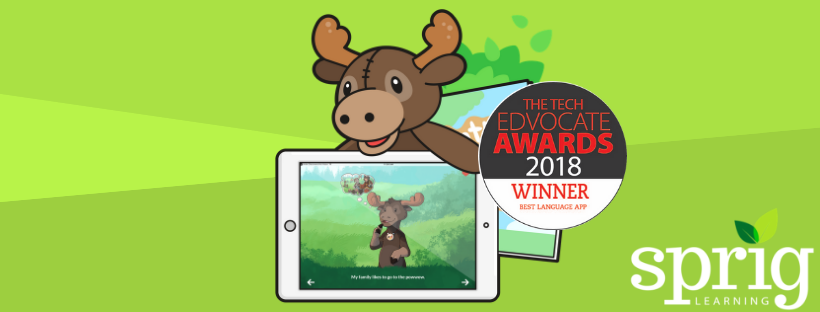
The Sprig Learning Bookshelf was built in partnership with Mi’kmaw Kina’matenwey of Nova Scotia, and provides Indigenous and non-indigenous students with access to guided reading in both the English and Mi’kmaw language. It provides early literacy support through levelled readers, and a variety of interactive features.
As an extension of the Sprig Learning Oral Language Program, the Sprig Bookshelf brings the stories of the Mi’kmaw people in Nova Scotia to life and provides access to parents, caregivers, and educators looking to extend learning beyond the classroom. Readers can choose to either read alone, or have the story read to them in either English or Mi’kmaw.
Beyond early literacy, the Sprig Learning Bookshelf acts as a tool for language revitalization among the Mi’kmaw community in Nova Scotia. Each of the four titles currently featured in the bookshelf was created in partnership with a working group of educators, community members, and Elders to represent the localized experience and culture of Mi’kmaw students. Speakers and non-speakers alike can see the Mi’kmaw language come to life, and promote language adoption and retention among some of their youngest speakers.
Download The Sprig Learning Bookshelf for free on the iOS app store for iPad Air today.
More from the Sprig Blog
Need for Oral Language Development in Early Literacy
Studies show that children with unresolved specific language impairment in kindergarten are at a higher risk for reading difficulties, particularly in phonological processing and reading comprehension.
Given the crucial stature of phonological awareness and reading comprehension in evidence-based literacy, mastering oral language early on is key to reading successfully!

Traditional Early Years Assessments VS Holistic Assessments
While the link between assessment and early learning is clear, there is a lot left to be desired with the data that is being collected.
Traditional assessments only capture two perspectives: the teacher and the student. This leaves a gap in our understanding of early learning that occurs outside of the classroom unidentified.
They are also prone to bias which has a negative impact on learning during the formative early years of learning.
There are many key people supporting student learning outside of school, so how can these perspectives be included and understood?
How can the potential of biased data be mitigated?
Holistic learning provides an answer to both of these questions, by way of holistic formative assessments.
Importance of Cybersecurity in Schools. What you Need to Know.
This article is dedicated to teacher’s use of technology.
The majority of early learners may not use computers, tablets and phones in schools, but their teachers use these devices to manage planning, instructional and assessment data.
Thus it’s very important to understand the importance of cybersecurity in schools.