CA (613) 212-2225 | US (720) 994-8779 [email protected]

The Equity Issues in Early Childhood Education That Will Stop You in Your Tracks.

Sprig Learning is a purpose-built company: to help every child succeed irrespective of all needs and circumstances.This article reviews systemic challenges that have long impacted equity in ECE. 

These challenges have deepened inequity in education. Some by faulty design, and others due to natural demographic changes. 

But first, why does equity matter?


Why Is Equity Such a Priority?

Equality of opportunity is the basic building block of education where every child receives the quality education needed to succeed. High-quality education in early years is especially important as so much learning and childhood development happens between birth to age eight. 

To this endeavor, there are federal, state and provincial programs that expand high-quality early childhood education programs so children from various backgrounds are able to have the same chances to succeed academically.

But the responsibility of the schooling system does not stop there. It’s how every child interacts with these early learning programs that ultimately determines achievement outcomes in academia and other socio-emotional domains. 

Every child is unique. Each child requires the collaboration of educators, parents, the community, researchers, administrators and policy makers to ensure equity. 

When families and children are left to fend for themselves in order to achieve equity and fairness, discrepancies in outcomes begin to take place.

These discrepancies usually correlate to families from low socioeconomic backgrounds and/or  non-native English speakers.

Here are two main causes of inequity in early childhood education.

Too Much Value is Placed on Standardized Testing

Child development specialists and educators recognize the importance of the early learning years. 

Observational formative assessments have always been used to monitor the growth and development of young students and catalog their progress.

In the late 90s in the US, there was an increase in formal standardized testing to categorize students into groups of different abilities or make a decision on whether to place them at a certain grade level. 

It’s a trend that has not abated. More instances of standardized testing in early childhood education have been making their way into large school systems in the US such as the Chicago Public schools. California and other states have been moving towards established assessments for k-2 students. 

Boys and non-English speakers are at a disadvantage when it comes to such types of early screenings. They are more likely to be held back or placed in a special group and miss out on the benefits of continued learning opportunities. 

LaParo and Pianta found in a meta analytic review, that only a quarter of variance on academic/cognitive skills on first and second grades tests were accurately predicted by preschool or kindergarten tests.

Standardized testing has its place in the system, but not at the onset of the early learning period. This early on, there’s too much at stake to mistakenly limit a child’s potential by holding them to a lower standard because of a standardized assessment taking place during a small moment in time.  

Yes, standardized tests are often valuable for education systems to understand the degree to which children are represented in different developmental domains. But this should not limit an individual child’s potential or learning trajectory.

The Role of Implicit Bias Is Unchecked Due to Lack of Data

Researchers have studied the effects of stress and ambiguity on educators who work in a school setting that foster unconscious attitudes, stereotypes and reactions. Implicit bias is real. Luckily, by being aware of it, we can mitigate its effect. 

The expectations teachers place on their students have been linked to student success. It’s an opportunity for educators to base those expectations on the back of evidence, rather than using any mental heuristics which are prone to implicit bias, or even explicit bias. 

Incorporating a data-driven decision making approach for educators can support teachers when planning daily instruction in their classrooms.. Data-driven instruction has been shown to positively impact the childhood education experience and enhance student outcomes. 

With an evidence-based approach that collects multiple data points during assessment and throughout the delivery of instruction during the school year, educators can best adapt instruction to the strengths, needs and interests of the child. Sprig Learning’s AI Engine was built to collect such data to personalize instruction for students,and support differentiated instruction in the classroom.


Diversity Necessitates Inclusion

In the beginning of this article, it was discussed how equity is the goal to strive for, beyond equality or access to education. But there are two things that also require discussion. Diversity and inclusion. 

In order to achieve equity, the diverse cultural and linguistic backgrounds of all children need to be recognized and included. When a child’s culture is reflected in the education system,  this increases a child’s sense of belonging and engagement when it comes to learning. 

Baltimore County Public Schools (BCPS) has 175 schools and over 100,000 students in its system. To ensure every student felt included and was treated fairly, teachers, parents, local businesses, community groups, and others were interviewed to gather their feedback.

As a result, and in an effort to ensure an equitable education for children from economically-diverse communities, it adopted adaptive technology that personalizes learning for all students.

Christina Byers, Executive Director of Leadership Development for BCPS elementary schools, says “Adaptive technology can help ensure that kids aren’t penalized because of their zip code or their race or what school they happen to go to”.

To  foster and support diversity in education, it is clear that diverse communities need to be engaged and included. 

The percentage of students from a low socio-economic status, who are English-language learners and who have diagnosed disabilities have all increased by 5 or more percentage points in the US over the last five decades.

Diversity is not only restricted to demographic and socioeconomic factors. There is also neurodiversity. Nearly half of all students in the public education system have some sort of learning diversity. In order to achieve ultimate equity in education, learning has to be personalized at an individual level.


Main Lessons in Equity
Building Equity Accountability Through Data

Whether it’s structures and processes in place such as the standardized tests, our own implicit bias, or the growing diversity in today’s classroom, there is a lot to be done on the road to achieving equity in early learning. 

Early learning is especially important as that’s where equity issues can first start to surface. Recent research across the US found that preschoolers are expelled at rates three times higher than school-aged children.  Nearly half of those expelled were African American children, despite representing only 18 percent of enrolment 

Rather than punitive measures, it should be better understood why certain children are acting the way they are, so they can be better supported from the start. 

For improved early learning equity, the Education Trust, a think tank, recommends building strong vertical data systems that track student progress over time. Sprig agrees, as it uses portfolios in its program to build a learning profile for young students which follows the child as they progress from grade to grade and year to year.  

There are benefits to be gained by monitoring learning over time, so we can better isolate the factors that could be causing inequity. To this point, the Education Trust, also recommends tracking preschool data at a program level, complementing  data at the district or county level.

Building Identity Through Culturally Responsive Resources

Educare Chicago is an innovative early learning research-based program that serves low-income preschool children in Chicago. It helps children develop the literacy, language, early math and social-emotional skills they need to succeed in kindergarten and beyond.

But they also address the issue of equity head on. Their approach “emphasizes a teacher’s capacity to help a child recognize how they are simultaneously different and similar to others.” 

As a result, children feel grounded in who they are and also able to comfortably engage with people from all backgrounds.

It’s important for students to develop a strong identity with relevant classroom resources and materials, so students see themselves reflected in their curriculum. 

There is lots to think about. 

By honouring diversity with culturally-relevant classroom materials, and monitoring student data over time, it’s conceivable to move forward in our shared goal of education equity for all. Sprig is leading this front, with expertise in both these areas. Contact us to learn more.
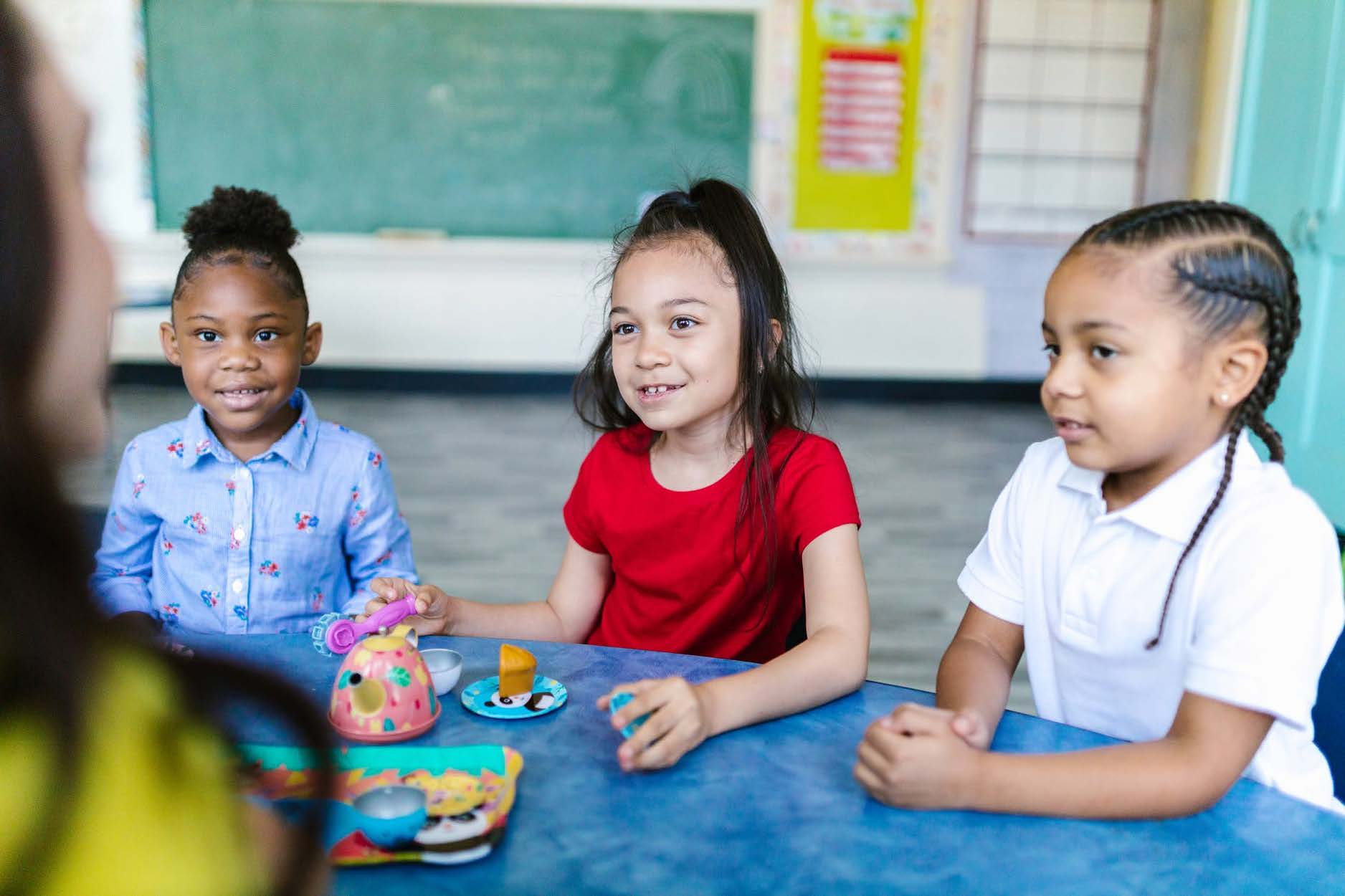

Dealing with Implicit Bias in Early Learning Assessments

Sprig Learning builds personalized, culturally relevant early learning assessments and resources that support schools, teachers, families, and students. 

In building these early learning programs, there are certain measures we take to provide the best learning experience for students. One of them is reducing implicit bias. 

Bias is inherent to all of us and is caused by personal experience, experience of others, cultural norms, the information we process, and the values in our education systems. Typically, we hear of two primary forms of bias:

1. Implicit bias. This is an automatic or unconscious reaction someone has toward other people. These attitudes and stereotypes can negatively impact our understanding, actions, and decision-making.

2. Explicit bias. This is the traditional conceptualization of bias. With explicit bias, individuals are aware of their prejudices and attitudes toward certain groups. Positive or negative preferences for a particular group are conscious. 

For this blog, we will focus on implicit bias and its impact on education. In early learning, educators and staff all have implicit biases when supporting their students. Given that bias is a product of our experiences, it is not desirable nor possible to eliminate. 

However, understanding and identifying bias, and its systemic impact on actions and outcomes at scale, is indeed possible — and essential in our efforts to counteract the harmful effects of bias on learning in the classroom.  Because the early years are a crucial juncture in the life of schoolchildren, the onus is on us to mitigate the effects of implicit bias as much as possible.


What is the Role of Implicit Bias in Early Learning

Given that educators have such an important part to play in the development and growth of young children, implicit bias affects their understanding of situations, decisions and actions. 

With implicit bias, the educator may be unaware that biases, rather than the facts of a situation, are driving his or her decision-making. This behavior is often labelled interchangeably as ‘unconscious bias’.

It is something that is not limited to people either. Implicit bias permeates throughout education resources, assessments, content, and processes, tracing back to their creator. 

The risk with implicit bias is not just how they make students feel, but also the impact the bias produces.

Affecting students’ attitudes and feelings can discourage early learners  from expressing themselves, and also creates the potential for students to learn from and develop their own biases themselves. 

Bias also affects learning by impacting the quality of assessments. When the outcome of assessments are affected negatively by implicit bias, it impacts the future learning outcomes of students.


Mitigating Early Learning Implicit Biases

While removing all bias may be inescapable, there are things that can be done to mitigate it.


Use a Mix of Formal and Informal Formative Assessments

  • National Association for the Education of Young Children (NAEYC) recommends the use of both formal and informal screening to assess children’s growth across all domains of development and learning. 

Indeed, there is a time and place for both types of assessments. Formal assessments occur at regular intervals in a structured setting, while it’s best if informal assessments occur every single day and are integrated into the teaching process .

How it mitigates bias: The more singular and isolated an assessment is, the greater the reliance on it to support the child’s learning and to determine the outcome of the student. 

Screenings are necessary to detect where a child is in terms of their learning development, but they should be complimented by formative assessments, which can be both formal and informal in nature.

With ongoing and regular opportunities to assess throughout the school year, it’s more likely that educators acquire a more comprehensive and accurate understanding of all the situational factors that affect learning in the student’s life.


Use Culturally Responsive Assessments

  • NAEYC further recommends that assessments be culturally, linguistically and individually appropriate and address all of children’s development, progress, strengths and needs.

The average classroom is more diverse than it has ever been, so it’s important to develop culturally responsive assessments. Looking at data from 2015, nearly 1 in 4 kids who attended public schools in the US spoke a language other than English in their home. In total, 176 different languages are spoken in New York City public schools. 

As demonstrated above, when left unconscious – biases can influence assessments for early learners, altering the potential learning trajectories for children. For example, this can sometimes lead to identification and assignment of an Individualized Education Program (IEP), labeling the learner for the remainder of their school career. 

While the extra funding and support that an IEP provides has plenty of benefit for learners in need, this labeling has also proven to lower self esteem, lower expectations from teachers and parents, and peer issues.

Outside of potential bias in the development of these screens and instruments themselves, there is implicit bias during the delivery of the assessment as well. Canadian researchers Ungerlieder and Riley document situations where teachers have lower expectations for Indigenous students in their classrooms relative to their non-Indigenous students. 

Lowered expectations often influence teachers’ appraisals of Indigenous students and introduce bias into their scoring practices.

How it mitigates bias: Culturally responsive assessment involves being focused on the student, and ensuring their involvement throughout the entire assessment process. Many children grow up speaking a language other than English at home and are exposed to a variety of cultures and transitions that are not always visible in a school setting.

When students are able to see their language and culture reflected in the curriculum and classroom assessments, they are more likely to engage and be successful.

When cultural and linguistic experiences are accounted for in assessments, this improves the accuracy of the results and ultimately increases student learning.


Make the Assessment Process More Comprehensive

  • Sprig Learning recommends a holistic, 360 degree view of early learning experiences in the home, school and community. To do this effectively, and reduce the potential fear and anxiety around assessments, teachers help provide context for the material prior to the assessment.  This includes befriending a puppet who plays a key role at assessment time and practicing  the 3-point scale used during the assessment.

Connecting the school to the home and the larger community is so important because it helps to fill in the blanks when it comes to understanding a child. The assessment itself is connected to the rest of school activities. It compliments the daily routine in an early years classroom. From the student’s perspective, assessment looks and feels like a normal day. 

How it mitigates bias: By collecting different perspectives on learning from the teachers, parents, other caregivers and most importantly the students themselves, this limits the potential bias in the overall, holistic assessment.. 

When it comes to the actual assessment, students are able to interact with the technology directly (like an iPAD) and demonstrate their learning. This reduces any subjective observations, and possible implicit bias, that a teacher may bring to that observation. As teachers sit beside and  guide the student through the assessments, they are also able to observe the child and their learning. 

Observational assessment is extremely important.  Over the course of the year, teachers are also able to track the learning portfolios of children, noticing the body of work they have completed to identify strengths and learning gaps. 

Dr. Grace from the Little School talks about the importance of observations and portfolios in assessing children. She calls portfolios “a collection of authentic assessments” and says that observations can help educators to arrange the environment and develop curricular plans and materials.

Thus, by adopting a comprehensive view and by using portfolios as a part of assessments, it’s easy to keep everyone in the loop about the progress of the child.


Reliance on Standardization and Implicit Bias

Standardized tests are normative in that they compare a child to their peers who are of the same age. Some standardized tests can further drill down results by gender, socio-economic and cultural background. 

But not every standardized test will use exact segmentation for fair comparison. Even if they do, such standardized tests are often meant to discriminate between groups of students, but not always test for behaviors that are educationally relevant. 

Relying on standardized tests alone does not yield direct information for choosing curricular content, deciding on environmental factors and guiding instructional strategies. 

In fact, when comparison is the only learning goal, there is a higher likelihood of implicit bias. 

Afterall, it’s meant to only categorize students into different levels, but not actually make the connection to differentiated instruction that supports individuals and groups of students.


Alternate Approaches to Reduce Implicit Bias

Alternative approaches are beneficial when it comes to early learning assessments.  

A comprehensive and holistic approach can be undertaken if there is adequate collaboration between teachers and caregivers. It’s something Sprig embraces wholeheartedly. 

When there is a comprehensive outlook on childhood development, the interrelationships between developmental domains are evident. While standardization targets everything as a separate subject, holistic learning looks at the linkage between multiple domains such as: motor skill development, oral language, numeracy and literacy. It makes use of portfolio and dynamic assessments, which are considered alternate approaches.

Portfolio assessments usually involve activities in and out of the classroom. Different learning materials such as animated stories and levelled readers are used, so there are enough things to interest early learners as they progress through the curriculum.

Dynamic assessments consider both the role of the educator and the child in assessments. Instead of just being an observer, they play a supportive role during the assessment whereby the students can also use the assessment as a learning opportunity.

It reduces the Hawthorne Effect, which is a type of bias where individuals being studied modify their behavior because of the awareness of being observed. 

It’s why dynamic assessments are so important where educators take the trouble to immerse themselves in the process as well, so assessments feel like an activity, and not a test.


Uncovering Old Bias to Move Forward

Holistic assessments accept that learning is a journey that begins at birth and continues throughout the early childhood years into adolescence. 

Two students may get different marks on a summative assessment despite both of them having completed all homework, tasks and activities related to the assessment. 

In such scenarios, it is likely that there was a gap in prior grade levels. This too can surface in the form of implicit bias, where we take completion as a sign of understanding, not realizing that the learning material did not always make sense to all students.

In the case two students have different rates of completion of tasks and activities, such discrepancy can often be explained by skill gaps. It’s not the missed work that is producing different results, but often the different skill gaps that were not previously addressed.

Based on any mistakes, it’s possible to target instruction and provide enough scaffolding to young students to help them address those mistakes and move on to the next grade level. But it doesn’t address the root of the problem—old implicit biases.

Rather than measuring standards from the current grade level, holistic assessments look at the whole life of the child to uncover missed learning opportunities. 

But is there even such a thing as missed learning? We round up this article with a case study.


A Case Study to Reduce Implicit Bias

Lindsay Unified School District (LUSD) in California looked at growth data segmented by groups such as English Learner, Migrant and Homeless. These groups had made significant progress during the pandemic compared to the rest of the groups. 

Had LUSD only relied on national reports focusing only on learning loss, it would have missed this opportunity to provide personalized support to groups that were showing promise. LUSD uses real-time data from formative assessments to personalize learning at the classroom level.

Such a case demonstrates a strengths-based approach where the bias is not in uncovering a threat in time, but rather missing an opportunity. It reminds us that there is so much hope in igniting the passion of learning in young students if only we are able to mitigate bias.

If you have not considered alternate approaches to standardized assessments, there is a good case to be made for them. Secondly, whatever approach you adopt, it’s important to supplement the process with equally diverse learning materials.

Learn more about how Sprig’s AI Engine reduces implicit bias in classrooms.

What You Should Know about Assessments In Early Childhood Education.

Sprig Learning helps every child succeed by uncovering and supporting their unique learning strengths, needs, and interests. One of the ways this is achieved is through formative classroom assessments. 

What are assessments? Every teacher uses them to some extent to assess learning. At the very least, report cards and progress report cards are issued as early as kindergarten and continue until high-school graduation. Most schools also participate in some form of standardized testing at certain grades. 

The shortcomings of current assessments are aplenty, but they are often brought to the surface whenever learning has been disrupted. 

COVID-19 is one such disruption. Many words, such as “learning loss”, are used to describe what happened as a result of the missed learning opportunities caused by school closures.

Across the world, we know that learning for 1.6 billion students was disrupted by the recent pandemic. While remote and hybrid learning struggled to engage many students, it is estimated that 463 million students had no access to virtual learning whatsoever.

A significant portion of young students in the US are said to be a minimum of 1, 3 and even 6 months behind where they would usually be at this time in the school year. Distance learning has affected disadvantaged communities disproportionately, as those neighborhoods have had a higher likelihood of school closures and limited to no access to learning

But did you know there is a learning disruption every year during summer? In what is termed the “summer slide”, kids return to classrooms in September following two months of no formal learning.  

We have always had a range of readiness among students in the school year. This year, there is a greater number of students on the lower end of the readiness scale and it is more palpable, because of the longer interruption. 

To address this, there needs to be an increased focus on the unique strengths and learning needs of each individual child. 

In order to accelerate learning this school year, formative assessments (either formal or informal) need to be an early and regular practice in the classroom. For schools that had not established regular, formative assessments prior to the pandemic, it’s unlikely that they have the means now to understand what stage their returning students are at in their development. 

Based on a poll of educators and entrepreneurs, only 1 in 5 of America’s K-12 students have experienced formative assessments. There is more ground to cover. The following paragraph delves into the reasons why formative assessments are especially important in early childhood education.


The Special Significance of Early Childhood Assessments

Assessments in preschool through grade 3 are of special importance in early childhood education. There is a litany of statistics that all say one thing—from birth to 8 years of age, it is a critical milestone to  build a solid foundation and maximize learning.

Assessing the developmental milestones that are achieved therefore is of the highest importance. It’s why formative assessments are suited to the cause, which collect timely and relevant data as a child progresses in their learning skills and abilities. 

Also at this stage of a child’s life, it’s a team effort to educate and care for the young learner.

It’s via the assessment, that teachers, administrators and parents are able to support the learning that is needed.  

Formative assessments inform teacher planning, they enable educator and family partnerships and they provide necessary information for program quality evaluation.

Teachers have the all important role of instructing children in the formative years. Assessments allow them to uncover student strengths and learning opportunities. 

They are able to differentiate and even individualize instruction where necessary, so early learners are matched with the right activities for optimal development. 

The student’s parents have the important responsibility of partnering with teachers to see how they can best support their child’s learning at home. Assessments reveal certain areas that need to be worked on and the progress made on each area of development. 

Communication here should be two-way, where teachers and parents share knowledge with each other to help the young student grow and mature as a learner. 

Program administrators and policy makers have the important mandate to monitor student’s development in the early years and address emerging issues. Decisions need to be made where to focus efforts, so there is continual improvement year-in and year-out. 

Whether it’s new teaching materials or the need for further professional development, formative assessments are good indicators of how a program is doing.


Considerations on How to Best Assess Early Learners During Their Formative Years

Many things have to be considered when devising an assessment method for early learners. For many young children, it’s the first time they are out of a home setting for an elongated period of time. 

Educators and other early childhood education professionals have to be especially considerate of all information gathered from early learning assessments.

Here are some considerations when choosing the right assessment method. Often, a combination of methods is used to build a learning profile for the young student. So while formative assessments are preferred, they may have different types of qualities as covered in the considerations below.

Consideration: Control

Children-Led vs Adult-Led 

Children can assess themselves, in what is known as “self-assessment.” Having “conversations” with educators is another assessment method that is closer to a child-led assessment. 

“Observation” is both child- and adult-lead, as children demonstrate their skills while educators observe how it’s done. 

“Setting tasks” is an assessment method that is more adult-led. Finally, testing is the best example of an adult-led assessment, where educators control the whole environment.

Consideration: Perspectives

One Point of View vs Many Points of View

At-home environments can be very different from at-school environments. Some children are exposed to different languages or cultures at home and have the challenge of reconciling those differences in a school setting. 

When assessing children, it’s important to not just gather the teacher’s perspective, but also the perspective of the child’s parents, and even the perspective of the wider community who also have chances to interact with the child. It’s one of the many characteristics of holistic learning. 

Opportunities to collaborate and share information must be provided to all these parties because they spend time with the child in different learning environments. Thus, they have inputs which make assessments more fair and accurate. The point of view of the early learner must also be taken into account, which is reflective of a more child-led assessment as mentioned prior.

Consideration: Frequency

Regular vs Once

Formative assessments deal with the day-to-day learning process as it unfolds. These assessments are integrated into the daily teaching practices and are ongoing. They can be both formal and informal. 

Summative assessments are used for reporting purposes. They provide a snapshot of all the learning that happened for a specific period of time. These assessments occur only at certain times of the year and are fixed.

While a formative assessment is “for learning”, a summative assessment is “of learning”. There is a third category of learning that is both formative and summative. It is the “assessment as learning” 

Children are being assessed for what they have learned, but are also learning from the assessment experience. This aligns more closely to formative assessments than summative assessments. 

When the student’s perspective is prioritized, they are allowed “do overs”, and the right interventions are applied following every single assessment. This is a very advanced practice of formative assessment based on real-time data and an attitude of helping rather than penalizing.

Consideration: Timeline

Diagnostic vs Standardized

This is a very interesting spectrum, where the two ends are more similar to each other than what lies in between. 

Diagnostic assessments are used to screen preschoolers or kindergartners when they first enter the school system. Such screening programs are usually developed by companies and administered by educators. It’s a very similar case with standardized testing which first takes place in grade 3 or 4 in Canada and the US. 

But what happens in between is key. That’s where a lot of the early learning growth and development occurs. If school systems were focused primarily on assessment screens and summative testing,  there is valuable data that is not being collected in a timely manner and subsequently not being used to support learning in the prime formative years. Important data such as student performance, behavior, attitudes, characteristics, motivations, interests, literacy skills, math skills, cultural backgrounds etc. 

Measuring such breadth of data is so instrumental to student success, that large government programs like Early Head Start and Head Start lists tables of performance indicators of school readiness. But once in school, should not the same rigor be applied in continually measuring such things? It leads us to think…..


When Is the Right Time to Assess?

Assessments, in the form of screenings, can first happen before children are placed in preschool. These assessments often screen for health and developmental milestones, but also other factors that determine preschool readiness. It includes social-emotional maturity and the ability to handle basic self-care tasks.

Kindergarten assessments or screenings are more common. Usually, they not only assess self-care skills, but also language skills, cognitive skills, and fine and gross motor skills. More than 25 states in the US require some sort of kindergarten entrance assessments.

Regular assessments from kindergarten to grade 3  tend to fade out or are very targeted or restricted to report cards only. 

Yes, educators have always used their own formative assessments in some shape or form such as administering quizzes or observing group work or individual tasks. But there is a lack of comprehensive formative assessment systems that apply differentiated instruction by regularly collecting data on daily and weekly learning.


What Are the Principles of Assessment?

In stating the top 20 principles of early childhood education, the American Psychological Association dedicates principles 18 to 20 to assessment. 

To summarize the principles: formative and summative assessments need to complement each other. The assessment processes must be valid and reliable with well-defined standards for quality and fairness. Assessment data must be interpreted appropriately. 

Holistic learning is a pedagogical approach that takes into account all of the aforementioned principles. It administers ongoing formative assessments that consider multiple points of view, including that of the student. As such, it is very careful in how the results of the assessment are interpreted to reduce bias. 

Besides formative assessments, there are actual diagnostic assessments as well which are more summative in nature and which identify the strengths, interests and challenges of each student. It establishes the base from which subsequent formative assessments can be applied to measure progress. 

It is an evidence-based system of learning that focuses not only on cognitive development, but also emotional, physical and spiritual development. Given its comprehensive outlook, it is open to understanding all the ways in which a child may develop, and thus qualifies for appropriate interpretation.


Choosing An Assessment System

A school can either choose a program-developed assessment tool that meets its specific needs, or a published assessment tool off the shelf that is more general and suited to assessments only. While both are  validated as tools for measuring early childhood development, there are tradeoffs. 

With the former, you can pick a platform that aligns well with your program goals, such as supporting students beyond the classroom setting, or enabling teachers to apply differentiated instruction. With the latter, you can more accurately measure the constructs that interest you and compare them to local, regional and national standards, but it may not have the practical functionality of supporting all critical stakeholders like the former. 

What’s important is that formative assessments become a standard feature of the education system and are reflected in the curriculum planning for school districts.

Sprig Learning is committed towards facilitating learning for all students, and especially those who need it most due to the recent pandemic learning loss . We are equally as committed to building a system where there is comprehensive and timely insight on student progress, so the linkage between home and school is not suddenly severed in case of future disruptions. 

It’s more than just helping students catch up. It’s about introducing a more student-centric assessment system, where everyone supporting the child has the information and tools they need to support their early learning. 

To learn more about holistic assessments and how they are implemented in schools, please do get in touch with us.

Benefits of Differentiated Instruction in Early Learning—The Comprehensive List [With Matching Strategies]

Sprig Learning believes that every child is truly unique with their own learning gifts, strengths and challenges. Naturally, we endorse differentiated instruction, or differentiated learning, as a teaching method. It is the act of varying instruction based on the needs and progress of groups of students. When customized for just one student, it is known as individualized instruction. 

Multiple studies prove the efficiency of differentiated or individualized instruction. It is starkly different to whole group instruction, which is the traditional way of teaching to the whole class, instead of groups or individuals. 

It’s a lot to ask a program or an educator to introduce or change their current curriculum or teaching practice to adopt new content or teaching methods. One of the benefits of differentiated instruction is that it doesn’t require teachers to implement a complete overhaul. Differentiated instruction only requires that one of the following elements be modified to suit the needs of the student group: teaching content, process, assessments or environment.

There are many ways to vary these elements, it’s likely you already employ the concept of differentiated instruction at some level.

Some of the most popular teaching methods in preschools and kindergarten—such as the hands-on approach, cooperative learning, conference learning and play-based learning—are not mutually exclusive. Mixing and matching them is one form of differentiated instruction. The educator sees what type of learning certain groups of students are most receptive to, and modifies instruction for that group to optimize their learning.


Need for Effort and Seeing the Benefits of Differentiated Instruction

Of course, everytime you modify an aspect of teaching, it requires planning and effort. There is also the aspect of follow up thereafter, to see if the varied instruction had its intended effect on the students. 

It’s why understanding the benefits of differentiated instruction is crucial. With proper understanding, greater clarity is achieved on why there is a need to differentiate. 

For this article, we browsed through both industry and academic literature to gather all the benefits of differentiated instruction. Each benefit is matched with a strategy. The benefits can be realized by following the respective strategy.


Differentiated Instruction Benefits & Strategies to Realize Them

Addresses Learning Gaps

Differentiated instruction is effective at providing appropriate instruction to students with a wide range of abilities. Some young students learn very quickly, while others need more time to learn and absorb specific concepts. Differentiated instruction takes both speed and depth into account when tailoring instruction. 

Strategy: When flexible grouping and self-selected reading time are used, targeted students are able to improve their phonemic, decoding and comprehension skills. 


Considers Both Active and Passive Learning

As everything depends on the unique learning strengths and opportunities of the student in differentiated instruction, the differentiated instruction teaching method  is very open to active learning, which is experiential in nature. Usually early learners prefer to engage more in play-based learning, but there are some who prefer a more informal learning. 

Strategy: For active learners, teach outdoors as well as in the classroom. Scheduling a lot of movement breaks is considered a teaching best practice for early learners. 


Caters to Individual Strengths

Young students have both learning strengths and challenges. If any course material or learning style does not consider learning strengths, then they are less likely to overcome learning gaps. It’s very common for students to struggle with certain concepts and skills, but by focusing on learning strengths, it is possible to unlock a child’s full potential. 

Strategy: The National Information Center for Children and Youth with Disabilities indicates that one out of five children struggle with the process of learning to read. It is important to remind ourselves that there have been many studies conducted prior on this topic and that the evidence suggests that “teaching children to decode letters and words, incorporating a whole language technique, and utilizing phonics instruction” are useful for gaining reading proficiency. 


Values Individual Interests and Abilities

Differentiated instruction is student-centered. Early learners inform educators how they best learn and what interests them. This is especially relevant in children from different linguistic and cultural communities. Relevant educator resources are needed to appeal to them. 

Strategy: In a study involving 48 elementary school teachers where they documented lesson objectives and recorded pre- and post-differentiated instruction results, students felt greater ownership of the class content and their performances when they were given choices in how they wanted to learn and be assessed. 


Does Not Neglect the Benefits of Group Learning

Differentiated learning is not the same as individualized learning, where learning takes place on a one-to-one basis. Differentiated learning can accommodate the individual learner as well, but it recognizes all the advantages of group learning where early learners can interact with their peers.  

Strategy: Use the think-pair-share method where students conversate amongst themselves before sharing their ideas with the whole classroom. 


Equally Qualitative and Quantitative

Differentiated instruction uses both qualitative and quantitative data to teach and assess early learners. When varying teaching content between differently skilled learners, it’s important to vary the difficulty of work. When assessing young students, it’s important to note all information about their learning environment.

Strategy: The whole basis of differentiated instruction is that not everyone is equally good at everything. Thus varying the length or quantity of assessment exercise or scaffolding the same learning activity into varied levels of difficulty are popular differentiation methods. While they are more tactics than strategy, they can be collectively looked at as a strategy. 


Increases Participation

Differentiated instruction has been proven to increase student engagement. Without active or passive participation, learning can often screech to a halt. 

Strategy: In the same study mentioned prior for “Values Individual Interests and Abilities”, it was found that students were more “motivated to stay engaged” in classes when they had greater say in the course content and methods of assessments. They displayed higher energy levels.


Includes Comprehensive Assessment

In order to differentiate, there is no getting around the need for a holistic assessment. It’s interesting that a distinction is made between educating the “whole child” versus targeted learning. In reality, both can be combined where the right targeted learning can be applied only after understanding the whole child.

Strategy: Use holistic assessments to unleash a comprehensive understanding of student learning. Not only does this approach gather numerous data points when screening students to properly understand them, it also considers subsequent formative assessments that will be conducted on the basis of this initial understanding. 


Ensures Flexibility for Teachers

The majority of this article is about students. But what about teachers? Differentiated instruction also takes educator preferences into account, where it provides them the opportunity to design lessons meant for particular groups of students. The approach is not restricted by a rigid curriculum, but can be creative in finding solutions of how to best teach the curriculum content to all students. 

Strategy: Regardless of the learning approach chosen, it must consist of “respectful activities”. Carol Ann Tomlinson, an education innovator and teacher, considered to be the pioneer of differentiated instruction, uses that term to refer to activities that are not dull drills or just fluff. Students have to continually work on tasks that motivate them and are considered valuable.


Is Inclusive Towards All

Differentiated instruction is aware of the current inequity in education. Based on this understanding, it attempts to provide students a high-standard quality of education so students have the opportunities and resources to excel regardless of their background or circumstances. 

Strategy: Depending on where your school is located, it’s important that the curriculum is reflective of the needs of the student body. When children see their culture and language reflected in classroom materials, they are more inclined to learn. 


Assessment is Thorough and Ongoing

Differentiated instruction uses formative assessments to monitor the growth of all students. It’s often that a student’s interests change or that their improvement accelerates or decelerates over time. Thus, in between summative assessments such as yearly progress reports or report cards, it’s important to keep track of learning trajectories. 

Strategy: Allow for do-overs when it comes to assessment. Sometimes young learners understand a concept but for whatever situational reason, may not be able to demonstrate that learning. In such instances, allowing them more chances to prove themselves before shifting anything else is worth exploring. It is an underutilized strategy.


Gels Well With Technology

Differentiated instruction is no doubt linked with collecting data. For years teachers have painstakingly collected notes on student files and organized them into folders. All of this takes time away from their actual teaching activities. Thanks to the ease of technology, all observatory notes, performance evaluations, and assessments can be stored electronically. 

Strategy: Technology assisted self-paced learning is optimal for differentiation, but for early learning all such activities must be supervised by adults. Despite the advantages of gamification of learning, it’s better that learning happens offscreen but that adults (teachers and parents) have a way to track progress using technology. 


Individualized Education Programs (IEPs) Are Accommodated

IEPs are a form of individualized instruction, where teachers are required to modify their teaching practices for special needs students. But just because a student is a part of an IEP, does not mean that their unique strengths and challenges cannot be differentiated further just like any other student. They can also be grouped with similar students with learning difficulties so they can benefit from group learning. 

Strategy: IEPs have specialized and intensive supports specific to a child’s IEP information, goals and objectives. Examples include waiting for a longer period of time for responses and prompting when response is not given.


Further Differentiated Instruction Strategies

While any other differentiated instruction benefits can be grouped under one of these benefits, it’s not the same for strategies of which there are plenty more. For example, there are choice boards, learning contracts, tiered assignments, etc.  

Differentiated instruction’s positive impacts have been proven in both preschools and kindergartens, so it’s important that educators, school leaders, and education technology providers are on the same page when it comes to determining the best strategies. 

But before that happens, it’s important to ask if differentiation instruction is serious enough to be considered a major objective? If the answer to that question is yes, then the right strategies (both included in this list and others) can be proposed. But first, we should closely examine the need for differentiation. We hope the list helps.

Formal Formative Assessment or Informal Formative Assessment. What’s Right for Early Learning?

Every month in the life of a child is crucial for early childhood development. The most significant brain development happens between birth and age 5. It’s said that 90% of brain growth takes place before kindergarten. 

The first critical period of brain development does not end until the child reaches 7 years of age. This early period is extremely conducive to learning and has long lasting effects for the rest of the child’s life. 

It’s a formative period, where most of the synapses between brain cells are formed. As it pertains to education, it’s a time for formative assessments.

Formative assessments monitor early learning to provide ongoing feedback, which educators use to adapt instruction and ensure that every child has the opportunity to succeed. It identifies progress and learning gaps as they happen and informs how to best move forward to optimize learning for the young student. 

Principal Jennifer McKay, former Senior Director of Early Childhood Education at Oklahoma State Department of Education says that “effective teachers make informed instructional decisions from formative assessment data.” 

Commenting on the pandemic, she states that formative assessments help close learning gaps and “provide a window to understanding student’s social and emotional well being” after a prolonged period of absence from school.

Examples of Formative Assessments Include: Homework assignments, in-class activities and group work.

Formative assessment (assessment for learning) is different from a summative assessment (assessment of learning), which happens only after a certain instructional period, and only a certain number of times a year.

Examples of Summative Assessments Include: End of unit reports, final grades and end of unit projects.

Clearly, both formative and summative assessments are needed to support all young students. Performing well in formative assessments is often a strong indicator of doing well in any summative assessment. In a meta-analysis of 250 formative assessment studies, formative assessment was found to have a lasting, positive effect on the quality of teaching and the achievement of students. The effects were much more pronounced for low-performing students, which is a testament to its effect in identifying and addressing learning gaps.

Formal Formative Assessment and Informal Formative Assessment

Often, formative assessments are contrasted with formal assessments, implying that all formative assessments are informal. While it’s true that summative assessments and standardized tests are more formal than common formative assessments, there is still variation in the latter in the degree of formality. 

Educators can assess students by taking notes. But there are also valid and reliable scales used by researchers to formatively assess young learners. For example, the Desired Results Developmental Profile (DRDP) looks at the development continuum from early infancy to kindergarten. It contains rating scales that are based on the acquisition of age-appropriate developmental milestones.

Similarly, National Institute of Early Education Research researchers have developed the Early Learning Scale and Kindergarten Early Learning Scale. These scales contain items that are easily measurable and critical to present and future learning. 

At Sprig Learning, we too have developed our own scale for early learning that is developed by educators, based on best practices and tested for efficacy, accuracy and bias. Adopting such a formative assessment approach ensures that educators are able to make timely data-informed decisions at every step of the child’s learning journey.

Formative Assessment Cycle

Formative assessments are a planned classroom practice of acquiring evidence of student learning.  They are often repetitive and occur throughout the school year. They are not a one-time event. Formative assessments take on the following cycle:

Examine Student Work > Inform Teacher Knowledge > Inform Instruction > Administer Tasks

There are data points that need to be collected in all four stages in order to facilitate this cycle. 

  • Student work assigned should be examined for completion and accuracy.
  • There should be a feedback loop that connects this information back to the teachers.
  • They should record the actions taken to identify learning strengths and address any learning gaps.
  • New classroom activities and tasks should then be assigned to measure progress and repeat the cycle. 

Formal formative assessments use some standard, rubric or well-defined grading system to assign a mark. But merely collecting data for this purpose makes formative assessments very rigid. It leaves no room for informal techniques of assessment such as observations, notes, and qualitative work samples that a number cannot evaluate. 

Rori Hodges, an experienced pre-kindergarten teacher, says “my formative assessment strategies are very informal. That way I can get an honest, natural response from the child. Very young children learn most effectively through interaction and exploration, not by lecture and memorization.”

So it’s good to have a lot of data to enable formative assessments, but the execution of such assessments and the actual interactive teaching that happens in the classroom are extremely important in the development of the early learner. We can label such face-to-face or observatory assessments as informal assessments.

Next, we look at some of the ways to do informal formative assessments. It’s best if the implementation and results of such activities are securely stored in a repository for future evaluation, thereby uniting formal and informal formative assessments.

Examples of Informal Formative Assessments

Monitoring: The teacher monitors the class to see if everyone is engaged. Observing students as they practice a skill helps teachers understand who needs help with what. 

Games: Tag or relay races. Alphabet naming. Interactive response sessions (including physical responses such as clapping and stomping). Play based learning is a great opportunity to observe progress, where young students let their guard down and reflect what they have learned. 

Parent Communication: Sending teacher-recommended activities to parents. When it comes to assessing learning progression, it’s great if parents help out by reinforcing the teachings at home. 

Journals: This is a more advanced form of formative assessments suitable for 1st graders. Journaling allows them to demonstrate their knowledge in words, numbers or pictures. 

Survey: Sometimes, it’s best to ask students directly if they have understood a particular lesson. They can indicate this by using fun methods like the Hand Thermometer (hands raised high if they understood and hands held low if they didn’t quite get it) and displaying coloured cards (each colour signifies a particular response). 

Partner Quizzes: Assessments can be turned into a group activity as well where young students quiz each other on what they have learned, and this activity is observed by a teacher.

4 Types of Formative Assessment Practices

Regardless of whether formal or informal formative assessments are used, it’s important that they follow best practices. NWEA, formerly known as Northwest Evaluation Association, lists four formative assessment practices that can be used to continuously gather evidence of learning to adapt teaching accordingly. 

For each best practice we have created a scale that shows the influence of formal and informal formative assessments.

Clarify what the students are to learn. Explain what they should know or be able to do.

                                                      Largely Formal

It’s imperative students understand what it is that they are learning and what their expectations are in class. As such there is more scope for one-on-one or group teaching.


Get evidence of where students are in their learning.

                                                      Largely Formal

Collecting evidence requires hard data. Such assessments can be done on a tablet or by building a learner’s profile by looking at all completed activities thus far. Different standards of progress can be created using a rubric.


Provide feedback to students on what to work on.

                                             Equally Informal and Formal

High degree of interaction with students is required to provide feedback, but the feedback also relates back to a formal assessment of their latest activities.


Activate early learners by getting them to own their learning.

                                                     Equally Informal and Formal

All improvements should be reflected in a report. Teachers and parents may share such reports with young students to incentivize further learning growth. Using a rubric sets clear expectations on what is to be achieved.

Why Formative Assessment is a Good Fit for Early Learning

Early education innovator and researcher Dr. Shannon Riley Ayers writes that formative assessment is “a critical piece of a balanced, comprehensive system of assessment for young children.”

It is systematic, but individualized. 

It is all encompassing in considering every aspect of a child’s learning and development.

It is not the collection of data, but the use of data.

It is a strengths-based approach. 

It is suited for differentiated instruction

In this article, we highlighted the importance of formative assessments, and how it precedes most other forms of assessments such as summative assessments and standardized assessments. 

So, what’s best for early learning? Our research shows that the right way to approach formative assessments is to take a balanced approach, which utilizes both formal and informal methods of assessment. At the end of the day, assessments should be useful to the educator and fun for early learners.