Welcome to Part 1 of the UFLI Progress Monitoring Blog Series, where the critical role of digital UFLI progress monitoring that aligns to the UFLI curriculum is explored.
The UFLI Foundations curriculum already maps to standards, such as the Common Core State Standards. It’s an evidence-based early learning resource.
It offers an explicit, systematic scope and sequence of lessons, along with built-in assessment, planning, and intervention resources.
But what about digitally tracking all the reading skills being taught, so they can be reviewed lesson by lesson, over time for every school, class and student?
To effectively implement UFLI progress monitoring, tracked reading skills are most effective when they are captured digitally and aligned with the curriculum.
In this first article, we examine:
What makes UFLI so effective in supporting early literacy instruction?
What opportunities emerge when tools can track data digitally and are created to align with UFLI’s scope and sequence?
How can educators benefit when digital progress monitoring is designed specifically around that structure?
Let’s begin by looking at the factors that led to the rise of UFLI as a trusted structured literacy program.
The Growing Importance of Structured Literacy and Data

Early reading success depends on two essential elements: systematic instruction and progress monitoring data.
Research in the Science of Reading has consistently shown that students learn to read most effectively when foundational reading skills are taught explicitly and sequentially.
At the same time, educators increasingly recognize that strong instruction should be paired with timely, actionable data.
Teachers need to understand how students are progressing through foundational reading skills so they can identify learning gaps early and provide appropriate support.
Without consistent progress monitoring, these questions are often answered only through periodic assessments and screeners, which may not capture the day-to-day development of early readers.
This growing need for structured literacy instruction has led many schools to adopt research-based programs such as UFLI Foundations.
With its clear scope and sequence, it has been a game-changer for early literacy teachers!
UFLI Foundations: A Research-Based Literacy Framework with a Clear Scope and Sequence
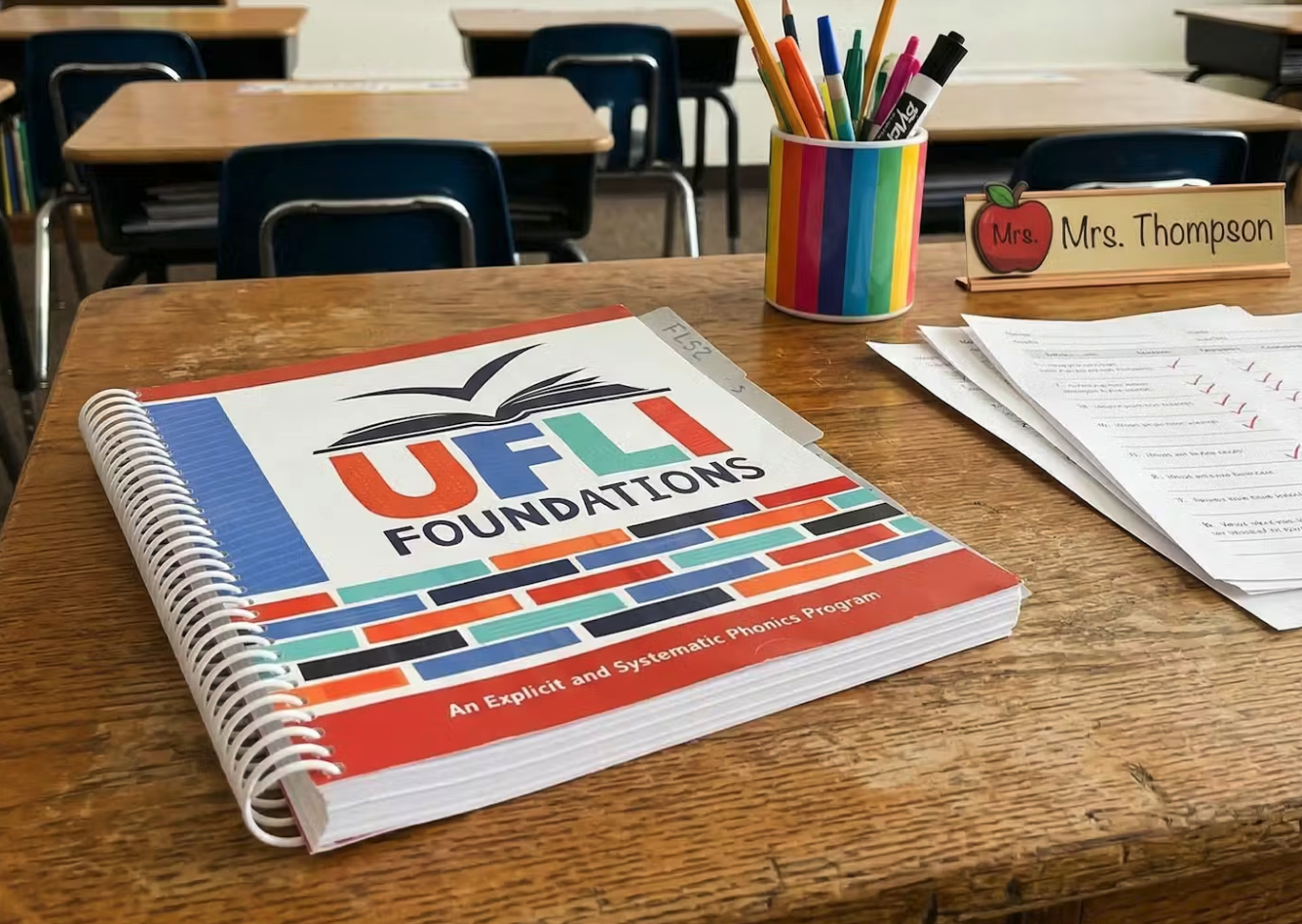 UFLI Foundations and the UFLI Foundations manual are the property of the University of Florida Literacy Institute©. All rights reserved.
The UFLI Foundations program, developed by the University of Florida Literacy Institute, is widely recognized as a research-aligned approach to early literacy instruction.
With over 500,000 instructional manuals in classrooms spreading over every state and province in the U.S and Canada respectively, the UFLI Reading program is helping millions of children improve their reading skills.
There are always new schools adopting it, many of them featured in Sprig Learning’s monthly newsletter.
The UFLI Foundations curriculum includes 148 total lessons, including introductory, concept, and review lessons, that are to be covered from K-2.
This structured progression allows teachers to move students through foundational reading skills in a deliberate and research-supported manner.
Because of its clarity and alignment with reading science, many schools rely on UFLI as a core instructional framework for early literacy.
Each UFLI lesson includes multiple reading skills, adding up to a total of 844 individual foundational skills and high-frequency words.
Across every student over three years, this represents a significant volume of data!
What about monitoring the progress of such evidence-based instruction?
Even strong instructional programs can present challenges when it comes to tracking student learning across the full sequence of skills.
There is a need for digital tracking and being aligned to the curriculum!
Why Digital Tracking Matters for UFLI Progress Monitoring
In many classrooms, teachers currently track UFLI progress using paper assessments, observational notes, or spreadsheets.
While these approaches can provide useful information, they often make it difficult to visualize progress over time and share critical, timely data across the entire literacy team.
It also struggles to give a clear ongoing view of skill mastery that follows each student from grade to grade throughout their reading journey.
As a result, answering key instructional questions becomes more difficult:
- Which students have mastered the currently taught skills?
- Which students need additional support before moving forward?
- Are certain concepts proving challenging for certain students?
To answer these questions effectively, progress monitoring systems must digitally track student data over time while ensuring a strong curricular alignment to the UFLI instructional framework.
Why Curricular Alignment Matters for UFLI Progress Monitoring
For digital progress monitoring to be effective, the skills that are tracked should align closely with the curriculum being taught.
When assessment and monitoring systems are aligned with the UFLI scope and sequence, teachers can track student progress based on the exact skills being taught during instruction.
Without this alignment, educators may struggle to:
- Monitor mastery of specific phonics concepts.
- Track progress lesson by lesson.
- Understand how students are moving through the full sequence of foundational skills.
Supporting UFLI Progress Monitoring with Aligned Digital Tools

When progress monitoring tools are created to align with UFLI’s scope and sequence, teachers can track student learning more effectively and accurately.
As teachers move through UFLI lessons, they can monitor the development of foundational skills such as:
- Phoneme segmentation and blending.
- Grapheme–phoneme correspondence.
- Reading fluency in connected text.
Digital tools designed with strong curricular alignment allow teachers to record observations during daily instruction rather than relying solely on occasional assessments.
For example, digital monitoring systems can allow educators to:
- Document skill mastery for individual students.
- Record instructional observations quickly.
- Capture evidence of student learning.
- Share notes and strategies across an instructional team
- Track trends across the classroom.
Sprig Reading supports this type of monitoring by aligning digital skill tracking with structured literacy instruction. Sprig Reading 4.0 was created to align with UFLI’s scope and sequence.
Teachers can document progress in the same sequence in which skills are taught, making UFLI progress monitoring more continuous and informative.
Importantly, teachers do not need to change their instructional approach.
Instead, aligned monitoring tools simply enhance the visibility of student learning within the existing instructional framework.
Supporting Timely and Targeted Literacy Interventions
One of the greatest benefits of effective UFLI progress monitoring is the ability to respond quickly to student needs for every lesson.
When teachers can see how students are progressing through the UFLI scope and sequence, they can identify challenges early and provide targeted support.
For example, educators may:
- Adjust whole-class instruction if a phonics concept proves difficult.
- Provide small-group reinforcement for decoding patterns.
- Deliver targeted intervention for individual students.
Rather than waiting weeks or months for formal assessments or screeners, teachers can make instructional adjustments based on the learning they observe during daily instruction.
When structured instruction, curricular alignment, and consistent progress monitoring work together, schools can create a responsive literacy environment where students receive the support they need at the right time.
Making Literacy Data Visible Across Instructional Teams
Early literacy instruction often involves collaboration among multiple educators.
Students may receive support from:
- Classroom teachers.
- Co-teachers.
- Early Childhood Educators.
- Literacy coaches.
- Reading specialists.
- Interventionists.
When UFLI progress monitoring data is stored digitally, this information can be shared securely across the instructional team.
Shared access to progress data allows educators to develop a common understanding of student needs, coordinate instruction, and plan targeted interventions more effectively.
This collaborative visibility strengthens curricular alignment across classrooms and grade levels, ensuring that all educators are working toward the same literacy goals.
Enabling Truly Data-Driven Literacy Instruction with Digital & Aligned UFLI Progress Monitoring
UFLI is designed to deliver systematic, research-based lessons that build foundational reading skills through explicit teaching and regular practice.
Sprig Reading enables teachers using UFLI to continuously monitor student progress digitally, track skill development, and identify students who need additional support.
UFLI ensures high-quality instruction grounded in the science of reading, while Sprig Reading ensures that instruction is visible, measurable, and actionable in real classroom contexts over the whole early literacy journey for students.
Besides being aligned with UFLI’s scope and sequence when digitally tracking reading skills, are there other features that further enhance this alignment?
Classroom Lesson Resources & Activities will be covered in Part 2 of this UFLI Progress Monitoring Blog Series. Stay tuned!
Align with UFLI’s Scope and Sequence