CA (613) 212-2225 | US (720) 994-8779 [email protected]

Applying the Science of Reading in Early Literacy Strategies

Sprig Learning provides every child a fair shot at success by improving early literacy.

Sprig Language leverages data from assessments to create an evidence-based approach that improves early literacy gains. 

When discussing early literacy strategies, there can be more than one evidence-based approach. Science of reading, or structured literacy, is a well studied concept. 

Throughout the years, this concept has had its supporters. Due to the evolving nature of research, it is difficult to be conclusive in stating what is the best approach for early literacy development. 

There are hundreds of different factors that determine literacy success, and there are potentially more factors that remain unresearched.

That being said, the evidence for the Science of Reading deserves thorough consideration from educators who are looking for ways to build early literacy skills in and develop proficient readers in their classrooms.

In this article, we look at how the Science of Reading informs early literacy strategies. 


The Science of Reading—In Theory and Practice

Science of Reading

The International Literacy Association defines the Science of Reading as a body of “objective investigation and accumulation of reliable evidence about how humans learn to read and how reading should be taught.”

Thus, the Science of Reading is composed of two main parts. One is understanding how language is learned. The other is the application of such knowledge.

The Science of Reading draws from several academic disciplines to understand the processes that are required for successful reading acquisition. 

It has been argued that what we know so far about the Science of Reading has not been adequately transferred into instructional practices for reading in the classroom. 


Achieving the Ultimate Literacy Goal Through Science of Reading

Reading comprehension is hailed as the ultimate goal of learning to read. 

There is strong evidence to suggest that reading comprehension arises from the ability to comprehend spoken language and to read words.

In order to achieve this, an early learner must first be well versed in oral language and acquire sufficient skill to decode words.

In classrooms, this translates to educators ensuring that their students are able to make sounds, and are aware of the sound structure of the words they are speaking. 

A solution that specializes in oral language development can help to ensure progression through the different levels of phonological awareness. 

The transition from oral language to phonological awareness to decoding words on print is further corroborated by research in the following section. 


The Science of Reading: 5 Components for Effective Reading Instruction

Effective Reading Instruction

Several decades of scientific research on reading reveals that effective reading instruction addresses five key areas. Namely:

  • Phonemic awareness
  • Phonics
  • Fluency
  • Vocabulary
  • Comprehension


Phonemic awareness is the most advanced stage of phonological awareness, consisting of activities such as blending sounds into words and segmenting words into sounds. It is the culmination of oral language skills.

Phonics becomes relevant in the decoding phase of the early learner’s journey, which is both visual and auditory in nature. Students make the connection between words and sounds while attempting to read.

Fluency is the ability to read accurately with proper expression. Sentence syntax and punctuation are important here. 

Vocabulary involves learning the meaning of more words to extend the range of what can be read and understood.

Comprehension is the ultimate goal of reading. It is the ability to construct meaning from all other skills before it. 


Strategic Reading Instruction— Systematic and Explicit Teaching

In any teaching strategy, systematic and explicit instruction is proven to be the best way to teach the 5 essential reading components.

Jointly, they might be referred to as strategic reading instruction.

Systematic instruction is the act of teaching skills and concepts in a planned and logically progressive sequence. 

As demonstrated before, the 5 reading components are best taught sequentially in strategic reading instruction. 

It’s not that early learners can’t learn how to read otherwise, but the linkage between each of the steps is evident. 

A study of over 1,000 school children from preschool to Grade 3, found that oral language had both a direct and indirect positive effect on word recognition. It provided a better foundation for early reading skill, compared to only relying on vocabulary. 

In addition to the order of lessons in the curriculum, the other part of the equation is the act of teaching itself. In this regard, explicit instruction is favored. 

Explicit instruction is the act of telling the students what is being taught. Lessons are clearly defined where the students understand what they have to do. 

Opportunities are provided to practice the demonstration of the newly learned skill or concept. 

Timely assessments are administered to monitor progress. These are known as formative assessments. 


Stages of Literacy Development

Stages of Literacy Development

As the science of reading is a systematic process of instruction, it helps to look at this medium of instruction via the lens of literacy development. 

Maryanne Wolf, author, professor, and early literacy advocate, proposes 5 stages of literacy development. Of these, the first three are pertinent to early learning as it deals with preschool to Grade 3 education.

  • The emerging pre-reader, who is typically under 6 years of age.

At this stage, the early learner learns through exposure to high-quality literacy materials and work on their oral language development. 

  • The novice reader, who is typically between 6 and 7 years of age.

At this stage, the student learns the relationships between letters and sounds and between spoken and printed words. 

  • The decoding reader, who is typically between 7 and 9 years of age.

At this stage, the early learner begins to read with increasing fluency.


Progression of Steps

Thus, we see the evolution of the early reader, who gains proficiency in reading by progressing from preschool to kindergarten and then to the primary years.

There are two more stages. The fluent reader, who is typically between 9 and 15 years of age. And the expert reader, who is typically above 16 years of age. 

In these stages, the reader uses all of their knowledge and skills gained to think about and comprehend what is being read. They also read from a wide variety of subject matters. 

It’s the earlier stages however, that has the most significant impact on reading success later on in life. 

The science of reading makes a particular difference in the early learning phase, where certain skills have to be taught and assessed that have to do with the act of reading. 


Using the Science of Reading for Effective Early Literacy Instruction

Science of Reading for Effective Early Literacy Instruction

A meta-analysis of more than 70,000 studies looked at interventions that improved performance in the language and literacy domains of: language, phonological awareness, print knowledge, decoding, early writing, and general literacy. 

It found that instruction that taught a specific literacy domain is likely to increase student performance in that domain. 

Interventions that focused on the domain of language exclusively, had a greater positive impact in smaller groups or one-on-one settings, compared to bigger groups.

Thus, for effective early literacy instruction, the Science of Reading approach is helpful as it isolates each learning component so strong bonds between each component can be formed. 

It does not attempt to try to teach everything simultaneously.

Furthermore, the importance of oral language is stressed, especially in smaller settings. 

Indeed, it’s why Sprig Learning programs collect student insights, which can be used to provide differentiated instruction to groups of students or individual students. Early learners can be grouped into different levels according to their reading ability. 

Sprig Language focuses particularly on the development of oral language. 

Another finding was that instruction that teaches both phonological awareness and print knowledge leads to improvements in decoding. 

This further establishes the fact how all the early literacy domains are interconnected. 

By not only learning reading skills, but having access to high-quality reading materials, it is possible to advance in reading. 


The Science of Reading—A Part of Early Literacy Strategy

Science of Reading Early Literacy Strategy

Regardless of what the future holds for the Science of Reading (depending on new evidence), it’s worth exploring at a time when there is mass learning recovery happening across North America. 

Even before the pandemic, literacy assessment scores were on the decline. 

In tandem with other early literacy strategies, the Science of Reading concepts are worth introducing into classrooms. Especially when there is ample evidence for its success.

To learn more about how to apply some of the Science of Reading concepts discussed in this article, (such as focusing individually on each early literacy component, systematically assessing each student, and incorporating high-quality reading materials into the curriculum), please get in touch with us. 

Building Early Literacy Skills in Schools. Thoughtful Considerations.

The Ontario Human Rights Commission recently released the Right to Read report, which showed the education system is failing children who struggle to read. 

Early learners are not always assessed properly and the interventions are often too few and too late to make a difference. 

Before they know it, the window of optimum learning opportunity passes, and they do not learn the essential literacy skills that are needed to become strong and confident readers. 

Is it only in Ontario? No. Almost two-thirds of all 4th graders in the United States l did not meet the minimal reading standards according to the National Assessment of Educational Progress. 

In certain states, only one out of every four students met the required standard of reading proficiency.  

Literacy is a science, and there is a plethora of things to consider when explaining variances in literacy outcomes. 

For schools, timeliness is especially important in making a difference in building early literacy skills. A stitch in time saves nine. 

In this article, Sprig Learning zeroes in on early literacy skills, and their impact on student outcomes. 


Why Is Early Literacy Important?

Importance of Early Literacy

By itself, literacy is paramount for success.

Learning how to read enables young students to acquire further knowledge. 

Statistics from countless studies show the effect of early learning on future academic and social success.

But it is even more important to develop early literacy! 

By habituating children to read, and educating them on the art of reading before they enter school, their learning potential is maximized. It’s why Sprig focuses on pre-K to Grade 3. 

In the early years of school, a systematic evidence-based learning path can be continued for them throughout their education. 

Such a structured literacy approach is known as the Science of Reading. Studies show that this approach can reduce the number of below-level readers by 25 percentage points. 


Structured Literacy vs Balanced Literacy

Simply put, structured literacy focuses on the skill of reading, whereas balanced literacy focuses on the activity of reading.

It does not necessarily have to be an either/or situation. 

But it is highly important that the skills of reading such as phonics, semantics and syntax are taught specifically and systematically, alongside taking part in reading activities. 

The Sprig Language program works all these learning areas and provides activities through which these early literacy skills can be strengthened. 

Structured literacy also has a diagnostic aspect, where instruction is assessment driven. 

It allows educators to identify learning differences in students so the right opportunities can be provided to them to learn a particular area. 

Sprig’s holistic approach to early learning always begins with such an assessment. 

In order to really ensure all students succeed, there is also the need to incorporate early literacy interventions into a system of structured literacy. 


What Is Early Literacy Intervention? 

What is Early Literacy Intervention

Early literacy intervention refers to the action that is taken to help early learners who are struggling in reading or writing. 

Groups of students or individual students who are not meeting grade-level expectations are identified as needing intervention.

Effective literacy interventions increase accountability for all students.

But if not done in a systematic way or if done only after Grade 3, these programs can be very costly and miss those students who need help. 


What Is the Need for Early Literacy Intervention?

Early literacy interventions enable early learners to make the right choices from the get go, when they are first introduced in the education setting. 

Young learners have diverse strengths, needs and weaknesses. 

For example, some children have phonological problems. If not corrected in time, it can lead to further oral language difficulties, which can compound into the inability to read at grade level. 

Other students may have early symptoms of dyslexia, which can be managed with specialized instruction.


What Are Early Literacy Skills?

What Are Early Literacy Skills

Early literacy skills refers to those foundational competencies required to learn how to read and write. 

By focusing on these skills early on, it’s possible to reduce the number of early literacy interventions needed. 

These skills include vocabulary, print motivation, print awareness, narrative skills, letter knowledge, phonological awareness, oral language development and learning to write.


Practices to Establish Early Literacy Skills

There are five main activities that prepare an early learner for reading. 

They are talking, singing, reading, writing and playing. 

The early literacy skills are a product of these practices.

Once an early literacy skill is identified, the appropriate literacy instruction strategy can be selected.

There are so many learning approaches that differentiate learning for students, based on their ability and current skill level. 

But the question should always be asked: what activities are in this approach, and what early literacy skills is each activity working on? 


Early Literacy Skills Classroom Best Practices

Early Literacy Skills Classroom Best Practices

When instruction is designed for a classroom, it’s best if all the early literacy skills are taught. 

This can be done through interactive activities such as storybook reading, rhyming games, singing songs, etc.

Sprig Language has hundreds of such learning activities that are neatly mapped to curriculum outcomes, and can be done as a whole class, in centers, or individually with each student.

It’s important to utilize a research-backed tool, system or framework that contains activities that teach all the different literacy skills. It helps educators adopt a structured literacy approach. 

The University of Pennsylvania’s Penn Literacy Network conducted meta-research to find evidence supporting early literacy best practices that results in improved student achievement.

4 classroom characteristics are explored that are ideal for the successful development of literacy skills.


Student-centered: Focus on engagement with the learning material and collaboration between students. 

Knowledge-centered: Focus on understanding the importance of reading and making connections between what is learned and how it applies to reading. 

This includes code-based instruction, which helps children understand the relationship between spoken language and print. 

Assessment-centered: Focus on regularly assessing students via formative assessments that guide learning.

Reflection-centered: Focused on understanding what is being read. Encourages students to learn different content areas using their acquired literacy. 


Stages of Early Literacy Development

The five stages of early literacy development are: emergent literacy, alphabetic fluency, words and patterns, intimidating reading and advanced reading. 

By placing more importance in emergent literacy and the earlier stages, it’s possible to create a safety net for students who are at risk of not reading proficiently. 

It is possible to improve literacy in schools in the earlier stages by having a classroom that: 

  1. assesses every student to tailor an individualized early literacy experience for them.
  2. promotes the joy of learning through activities (balanced literacy). 
  3. teaches early literacy skills systematically (structured literacy).
  4. empowers early learners to practice every skill learned.


What about English Language Learners?

Sprig has a Revitalization program, which promotes Indigenous and other local languages. 

Research shows that English-language development can be accelerated by making a connection between a student’s first language and English. Proficiency gained in the first language can be used to learn a second language. 

By supporting a diverse set of home languages, students are provided with a more culturally responsive educational experience. This allows them to absorb concepts more quickly. 


Prioritizing Early Literacy. Not a Magical Solution, but a Change in Focus.

Prioritizing Early Literacy

At Sprig Learning, we aim to provide every child a fair shot at success. We know the importance of literacy too well, especially in the early years. 

These considerations provide a preliminary overview into the reasons and benefits for adopting an approach that specifically caters to early literacy skills. By understanding how reading skills unfold for a variety of students, a school can adopt the right approach for their classroom and educators. 

Assessments, early interventions and evidence-based activities targeting specific skills can be seamlessly integrated into the learning process.

Educators have a lot on their hands, and any new approach should support their instructional practices and make their lives easier. 

To stay updated on the science of literacy, please subscribe to our newsletter, Root to Fruit, written for those who value early childhood education. 

Have questions about using intuitive tools that make a difference in building early literacy skills? Contact us. 

High-Performing School Improvement Plan [With 3 Actual Cases from Early Learning]

Sprig Learning designs high-quality and culturally enabling early literacy and numeracy programs for pre-K to Grade 3. 

High-quality early learning programs are used by school districts all over North America to produce meaningful results and deliver the best outcomes for young students.

The schools in these school districts listed here go above and beyond to meet their goals and objectives, and are thus categorized as high-performing schools. 

What sort of practices do these schools and school districts engage in?


Creating a School Improvement Plan That Will Be High-Performing

High-Performing School Improvement Plan

Those trusted with creating school improvement plans have a strong understanding of what’s at stake and the school’s current situation.

The basics are common knowledge to those involved in elementary-secondary education. 

Afterall, the key outcomes always support student achievement, education equity, attendance rates, graduation rates, etc.

The challenges are perennial in nature, and are both systemic (e.g., a lack of professional development) and operational (e.g., teacher recruitment and retention). 

It helps to look at actual case studies from early learning to appreciate the reality on the ground and inside the classroom. 

By observing these schools and districts, it’s possible to learn and take inspiration to solve similar challenges or implement a model or solution that best supports all students. 

Three case studies are examined below, each followed by a discussion.


1. Adding Instruction Time for All Students

Adding Instruction Time

Credit: Boston Public School YouTube Channel

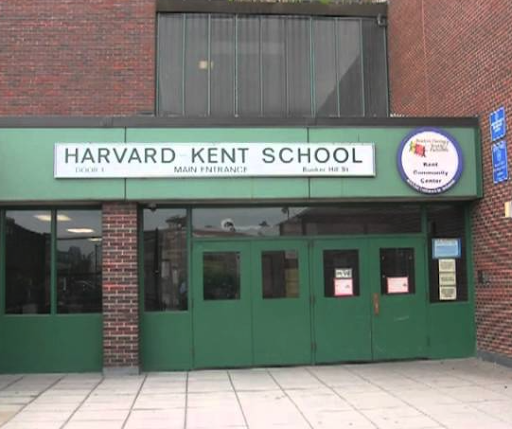
​​Harvard-Kent Elementary School in Massachusetts, is a welcoming school in a very diverse community that includes multiple ethnicities and dual-language speakers. 

The school has a set of wonderful learning initiatives such as intervention blocks, which were added so teachers were able to implement trauma-sensitive practices that help students cope with socio-emotional difficulties. Compared to math, its literacy proficiency rate for students was relatively low.

To address this, it extended the learning time at school by 40 minutes in 2015 for those struggling with literacy, to help bolster their critical foundational skills. 

At the same time, students assessed at meeting literacy standards used the time for accelerated learning, strengthening their reading comprehension skills with access to complex texts.

The dedicated time for intervention ensured that personalized learning opportunities were maintained throughout all grades. Grade-level texts were coupled with grade-level tasks, with scaffolding for struggling learners and extension activities for those requiring additional challenges. 

The school also adopted an interest-based learning approach, where students were asked what they wanted to learn about. Lessons and units were adjusted with the students’ interest in mind. 

As a result of all these efforts, English proficiency skills nearly tripled between 2015 and 2019!


What Worked

Certainly, all high-quality early learning programs consider the length of instruction time into their planning. 

The more time teachers are able to spend directly with their students, the better the student outcomes usually are. 

It’s also interesting to note the inclusive approach where the extended learning time was for all students. Both texts and tasks could be modified to suit the level of every learner.  The focus was to  ensure every learner benefitted from this increment of instruction time. 

Sprig Learning has an intuitive platform that easily aligns to the various schedules of teachers, leaving room for more direct instruction time! Its holistic approach is also strength-based, akin to the model adopted by Harvard Kent school. 

To really ensure that all learning strengths are being identified, Spig helps schools to monitor students in different outcome categories that are mapped to the local curriculum. 

Dynamic storybooks are a part of its educational materials, and the level of difficulty of recommended activities are a key feature of both the oral language  and math platforms. 


2. Using the Right Frequency of Assessments

Right Frequency of Assessments

Credit: Google Earth

Cornell Elementary School in Des Moines, Iowa, faced the challenge of continually assessing new students who may or may not need extra support. 

To keep eyes on all students, it monitored progress in the core curriculum for new students in the district. 

They followed a three-tiered responsiveness-to-intervention model.

Kindergarteners’ initial sound fluency was assessed in the fall, and their phoneme segmentation fluency was assessed in the winter. 

For Grade1 students, nonsense word fluency was assessed in the fall, and oral reading fluency was assessed in the spring. 

Students scoring below benchmark levels were matched with the right type and intensity of instruction. Either they remained in the core curriculum with changes to instruction or received supplemental support. 

Examples of supplemental support included: more systematic instructional sequences, more precisely targeted instruction at the right level, and more opportunities for corrective feedback. 

The United States Department of Education listed Cornell Elementary School as one of the exemplary schools to implement the responsiveness to intervention model. In particular, its progress monitoring practice was praised as commendable. 


What Worked

Assessing for the core elements of early literacy and numeracy at different junctions throughout the year ensured that no student was left behind.

As soon as the problem area was identified, the right action could be taken at the right time.

It was important to ensure all students are successful throughout the core curriculum, but it was also helpful to have the checkpoints along the way to ensure the unique learning needs of each and every student were being met.

While the assessments were already in sequential order, students who needed more support, received more systematic instructional sequences. It was almost like the core curriculum was too rushed for them, and so they needed to master the basics first. 

Sprig Learning has a very similar approach with its early learning programs, where there are not only enough assessment opportunities in a holistic formative assessment model, but all the fundamental learning components are connected to the students’ strengths, needs and interests.  

When it is time to do the assessment, proficiency in newly learned concepts are measured, along with a host of other information, such as a change in the learning environment, learning strengths, learning styles etc. 


3. Packing High-Quality Learning Early On

High-Quality Early Learning

​​Credit: Jesse Costa/WBUR.org

Boston Public Schools (BPS) wanted to mitigate access and achievement gaps among students of various races, ethnicities and socio-economic backgrounds. 

To achieve this, it piloted a pre-K to Grade 3 initiative that included a new curriculum, a robust focus on vocabulary, differentiated instruction and professional development. 

More developmentally appropriate instructional materials were highlighted in all the early elementary grades. 

Storytelling was added to the preschool curriculum, and more student-centered instruction was incorporated into the grade 1 curriculum. 

Different learning activities, opportunities and lessons were provided to students matching their varied needs. For example, the same classroom activity could be worked on with visual aids or manipulatives or in smaller groups. 

Following the implementation of all these practices, a noticeable increase was observed in the students’ abilities to think critically and work collaboratively. 

The students were using a higher level of vocabulary compared to cohorts in previous years. 


What Worked

Using student-centered educational materials and curriculum as early as pre-K made a world of difference!

Personalization of education was introduced as early as grade 1, and existing instructional practices were bolstered by time-tested, high-quality early learning activities like storytelling. 

By raising the bar of high-quality early learning and making it readily available to every student walking through its doors, irrespective of their background, BPS was able to drive equity by closing the achievement gap. 

Sprig Learning is a big advocate of personalized instruction that is developmentally appropriate.

It has hundreds of learning activities in its early literacy program that support verbal communication skills such as storytelling. Similarly, it has numerous classroom and group activities that are designed to improve vocabulary.

The earlier the important language and cognitive concepts are grasped, the better it is for the student. 

There are few learning solutions out there that focus exclusively on early learning. Sprig is one of them. 


 High-Performing School. It’s Possible. 

High Performing School

​​The practices outlined in these three schools and districts outline how it’s possible to become a high-performing school district. 

High-performing schools and districts are able to surpass performance benchmarks and make a difference in the lives of educators, students and parents.

Everyone has a stake in the improvement of preschools and elementary schools in their locality. 

When writing the next school improvement plan, see how you can increase instructional time for students, have a systematic approach to assessment, and offer high-quality personalized learning materials in the earlier grades.

Sprig Learning can help you do all three. We are passionate about early education. To discuss more, give us a shout