
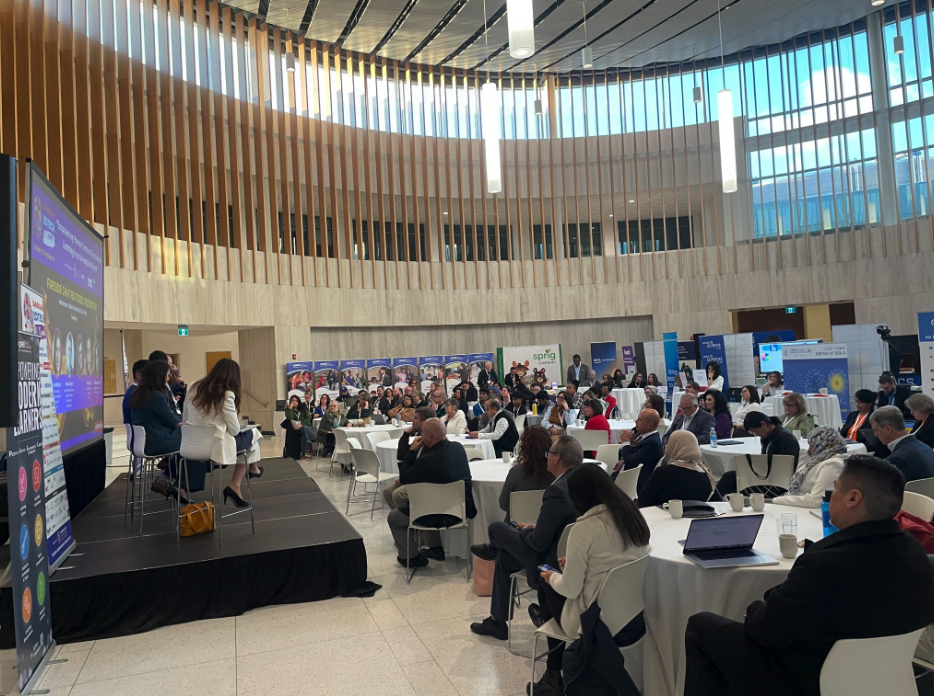
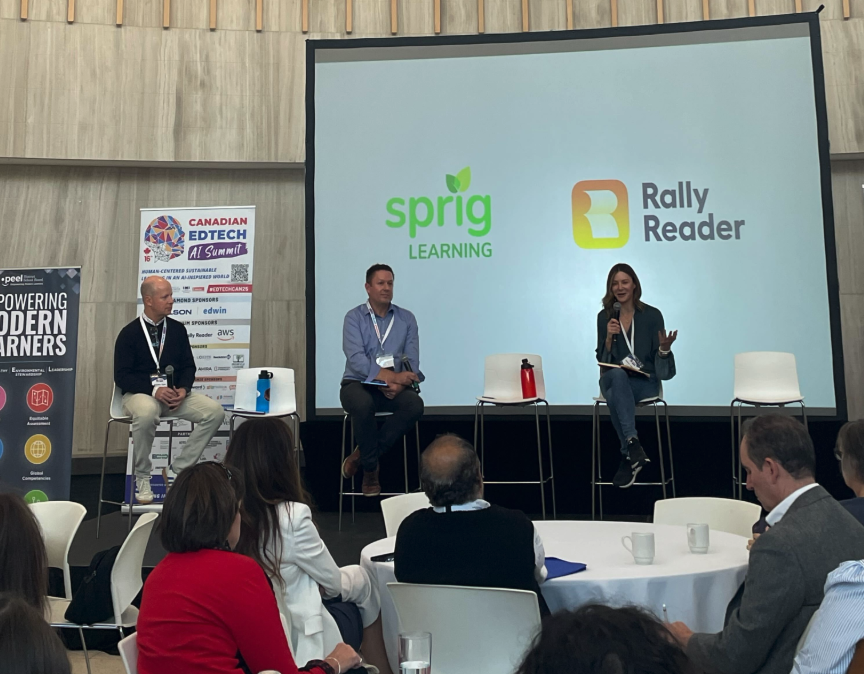
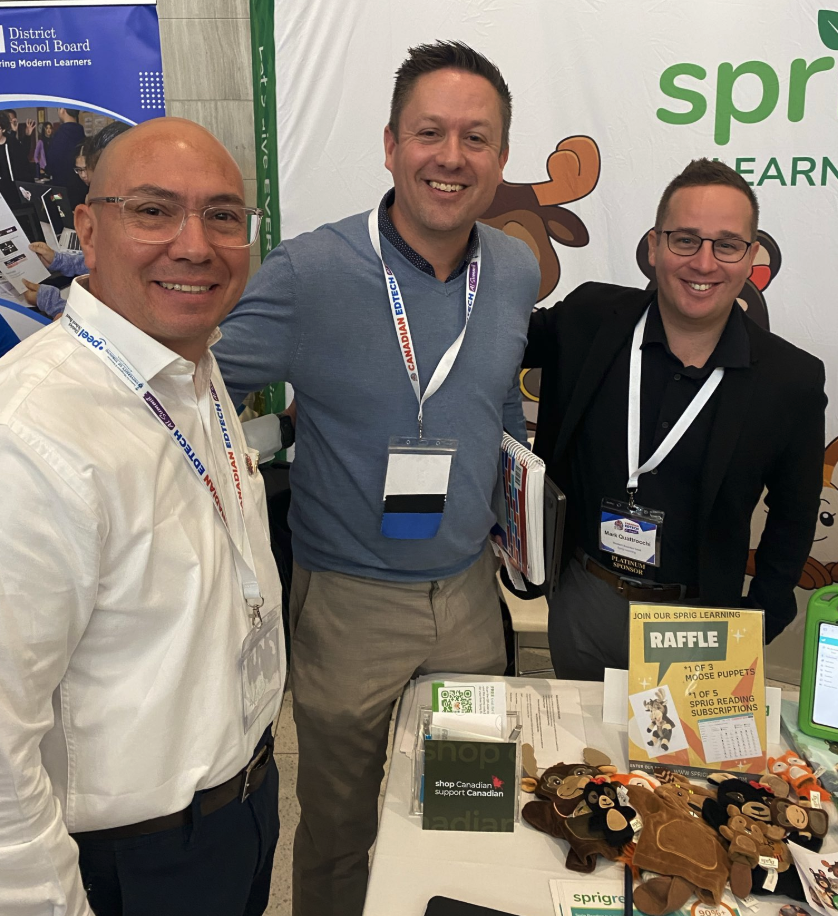
Sprig Learning was honoured to present on two panels and actively participate in the 2025 Canadian EdTech Artificial Intelligence (AI) Summit, engaging in meaningful discussions about the latest innovations in education.
The summit offered a valuable opportunity to connect with educators, thought leaders, and fellow panelists who are deeply committed to advancing equitable, technology-enhanced learning.
Sprig is grateful to everyone for the amazing connections at the summit. Thank you! As a company focused on innovative and equitable solutions in early learning, it’s important to highlight certain insights pertaining to innovation and AI in early literacy.
Here are some key reflections that emerged from our discussions and ongoing exploration of AI in early literacy, presented via questions:
What is AI in Education and Early Literacy?

AI Definition
Artificial Intelligence (AI) is the branch of computer science focused on creating systems that can perform tasks that typically require human intelligence, such as understanding language, recognizing patterns, learning from experience, solving problems, making decisions & predictions or creating new content.
Ask yourself: are these tasks already happening in early literacy? Are they currently being performed by AI technology? Can AI assist in being more efficient and effective with these tasks?
After all, these capabilities are the very essence of AI.
What Gets Mistaken for AI in Early Literacy?
Given the surging popularity of AI, there is an inclination to classify and market new innovations in early literacy as possessing AI.
So before discussing AI in early literacy by listing its current uses, it’s important to state what is not AI in early literacy, or what often gets mistaken as such.
What is Not AI
- Leveled literacy apps that move students up and down based on correct answers. It follows conditional branching. The progression is rule-based, not data-driven learning or prediction.
- Digital assessments that score right or wrong answers. This includes game-based assessments that analyze student performance and adjust question difficulty based on prior performance. They generally use algorithms and scoring logic. There is no learning or adaptation.
What are the Current Uses of AI in Early Literacy?
With technology capable of mimicking aspects of the human brain, the potential for AI in early literacy is virtually limitless.
Still, by examining both existing tools and emerging innovations, it’s possible to identify several key categories:
Personalized Reading Assessment and Feedback
AI can listen to a child reading aloud, analyze their speech and identify errors in areas such as decoding, fluency, pronunciation, and provide immediate feedback or flag specific areas for teacher follow-up.
Adaptive & Differentiated Literacy Instruction
AI-driven platforms can continuously learn and tailor reading material and tasks according to a student’s current evolving skill level, preferences, and pace, thus supporting differentiated instruction in a whole class or small-group context.
Supporting Interactive Reading and Caregiver Engagement
AI can prompt and guide teachers or caregivers to engage children in rich, interactive reading conversations such as dialogic reading, which boost comprehension, vocabulary and narrative skills.
Early Literacy Classroom Resource Generation
AI can help teachers create new resources and activities for their students that more accurately reflect their current needs.
What Does True AI Mean for Early Literacy?
While AI solutions offer exciting possibilities, it’s essential to consider their implications in PreK-3 settings.
To truly understand AI and harness its power for the best outcomes for both teachers and students, the following points should be considered.
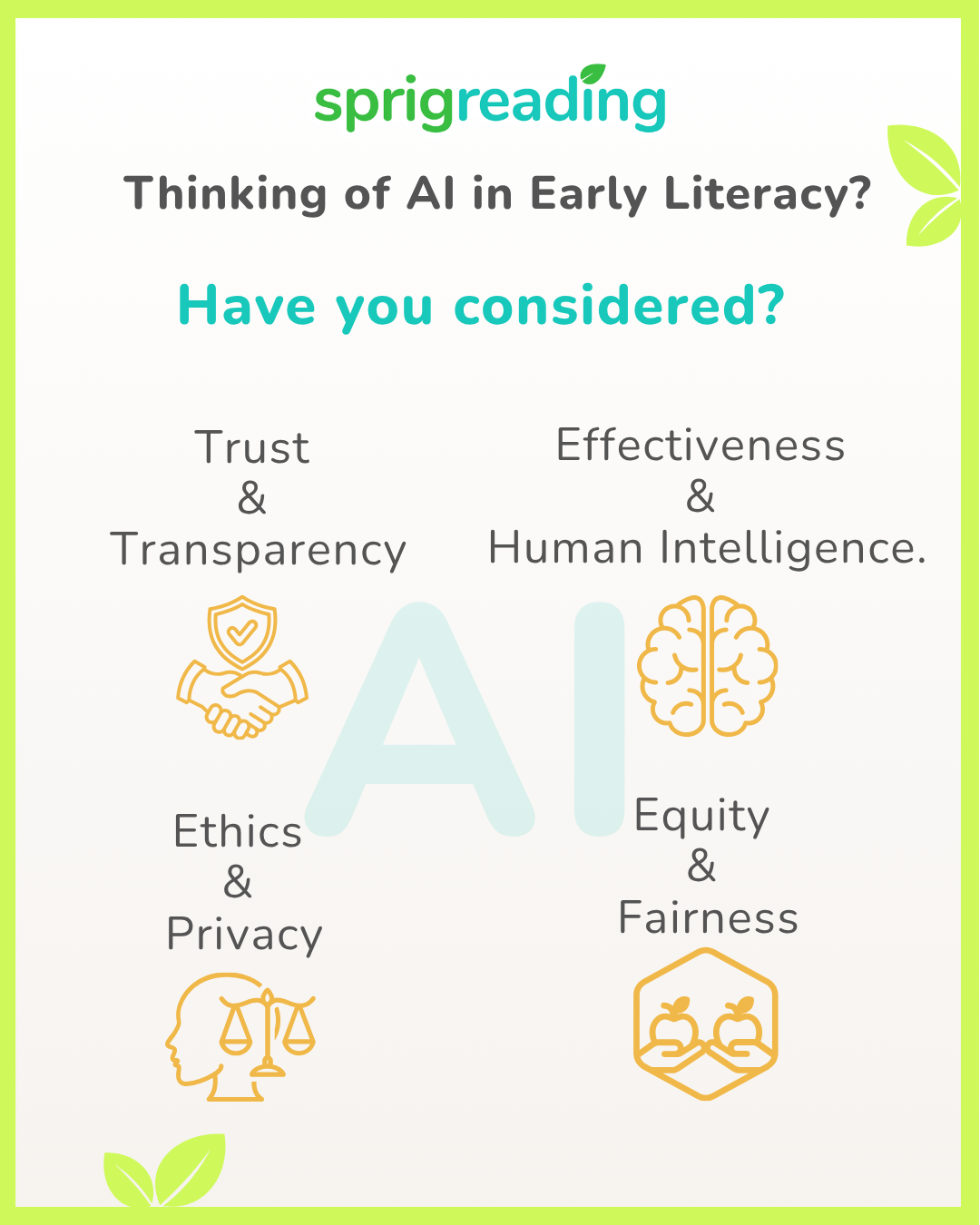
Trust and transparency: Educators should know how data and feedback are generated. AI is only as good as the data it’s trained on, which means issues such as bias must be carefully considered.
Because AI can scale far beyond traditional systems, it’s essential to clearly define the purpose for which it is being built.
Effectiveness and Human Intelligence: Only adaptive, evidence-based systems can truly personalize instruction. Teachers can use AI but still employ their knowledge and discretion in the classroom.
AI should support teachers in repetitive and time consuming tasks by taking on the heavy lifting, but not by taking their agency away. To find that balance, we need to better understand how effective AI truly can be.
Ethics and Privacy: True AI often requires confidential student data, so security safeguards are essential.
Schools and developers must ensure that data collection, storage, and use comply with ethical and legal standards, protecting every child’s right to privacy and security.
Equity and Fairness: AI has the potential to close learning gaps, but only if access, design, and deployment are equitable. All students, regardless of background, language, or ability, should benefit from its capabilities.
If the best technology remains out of reach for a large part of society, its benefits lose their meaning.
What is the Future of AI in Early Literacy?
Sprig Learning believes that AI will take us closer to bridging the early literacy gap. Right now, access often depends on where a child lives, their home language, or classroom resources.
AI could change that by acting as a personal reading companion, noticing struggles, adapting lessons, and supporting learning in any language, at any time!
Used thoughtfully, AI can make high-quality early literacy support available to every child, giving them a fair shot at success.
What Should We Be Mindful of as There is More Innovation?
“The one thing we must protect as we innovate with AI is human connection, especially for our most marginalized students.” says Jarrett Laughlin, CEO of Sprig Learning.
AI can do incredible things, but literacy and learning are deeply human. Children facing poverty, bias, disability, or language barriers need to be seen, heard, and believed in by caring adults.
Jarrett further adds “Our goal should be for AI to strengthen, not replace, human relationships, freeing teachers to connect more deeply and reflecting the voices of the communities it serves. Innovation without empathy and equity isn’t progress, it’s just more technology.”
The Need for Data in Early Literacy
One thing AI cannot function without is data. Without it, knowledge stagnates and the system becomes little more than pre-programmed software.
This raises a key question: are there early literacy systems that provide the mechanism for continuous, actionable data?
Sprig Reading answers this by enabling teachers to track progress across over 200 foundational reading skills, creating a steady stream of formative assessment data to inform instructional decisions.
Sprig Reading 4.0 is here! It tracks every foundational reading skill, pairing assessments with instructional guidance and multimedia note-taking. Each skill comes with its own tailored activities and resources to support learning. Discover how it works and try it today.